What are the best leadership assessment tools to assist you in becoming a better leader? Understanding your strengths and areas of development as a leader is the first step.

The Best Leadership Assessment Tools To Start 2023
What are the best leadership assessment tools to assist you in becoming a better leader? Understanding your strengths and areas of development as a leader is the first step.

Leadership Is All About Team Trust and Performance
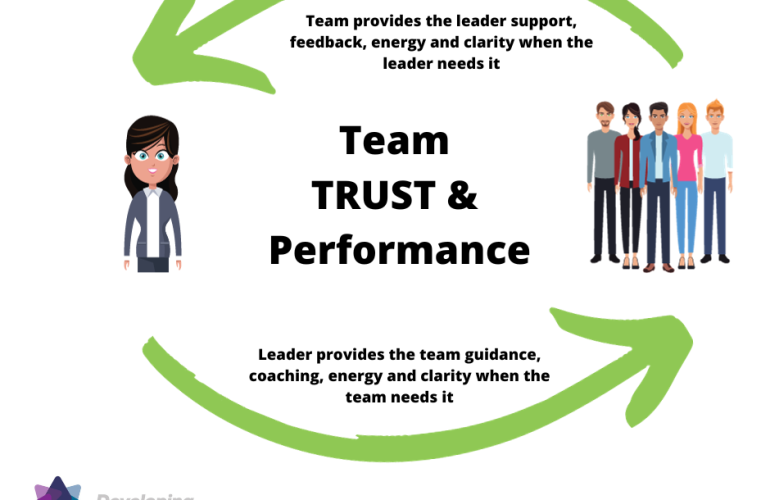
Team trust and performance. For a team to perform at a high level, the team needs to trust the leader as much as the leader trusts the team. A break down on either side of this trust equation results in poorer performance. High Performing businesses have developed a strong sense of trust between leader and team – a truly symbiotic relationship – which drives performance.
Leadership Role
In relation to the team, the leaders role is to provide guidance, coaching, energy and clarity when the team needs it. The key phrase here is ‘when the team needs it’. As a leader, one of the hardest lessons to learn is when to apply your will / drive / energy / purpose to the team, and when to provide the team the opportunity to provide those things for themselves. If the leader is only focussed on themselves, they can ‘over apply’ each of these traits, to the annoyance of the team.
The leader places a level of trust in the team when providing each of the listed behaviours – guidance, coaching, energy and clarity. They all take time and effort, and the leader needs to know that those efforts won’t be wasted. One of the key roles of a leader is to provide the team these behaviours when they can’t provide it for themselves – there needs to be a willingness on behalf of the leader to provide it, and a willingness on behalf of the team to accept it. An unwillingness from wither party will result in a lack of trust and poorer performance.
When a leader can’t (or won’t) provide these behaviours for the team, the team loses trust in the leader – which also affects performance. In this way, a high performing team has a truly ‘symbiotic’ relationship with each other – they help improve and sustain each others roles.
Questions: As a leader, team leader, supervisor, manager or small business owner:
- Do you provide guidance on personal performance and role to your team members?
- Do you coach your team members on how they can improve, as well as how they can maintain their strengths?
- Is your energy and enthusiasm easily ‘caught’ by your team? Is your energy infectious? If so, is it raising your team up or pulling them down?
- Do you provide role clarity and provide your leader with an understanding of their role in the team and / or business?
If you had to think hard on any of these questions, you could be doing more to improve the trust and performance of your team relationship.
Teams Role
Just as the leader has input into the teams performance, the team plays a crucial role in the leaders performance – a role that is often forgotten or overlooked.
The team provides the leader support, feedback, energy and clarity when the leader needs it. Leaders aren’t superheroes – they are not and endless supply of energy and positivity – there are times when circumstances can get the down (just like team members). When this happens, high performing teams can fill the void and provide energy, support and feedback to the leader.
Teams that don’t do this demonstrate a lack of trust in the leader, which impacts both the performance of the leader and team. Again, the role of the team and leader is symbiotic – they help improve and sustain each others role.
Questions: As a team member, colleague or peer:
- Do you provide support to your team leader in the form of encouragement or assistance?
- Do you provide feedback to your leader on what they did well and what they could improve on?
- Is your energy and enthusiasm easily ‘caught’ by your leader? Is your energy infectious? If so, is it raising your leader up or pulling them down?
- Do you provide role clarity and provide your team with an understanding of their role in the team and / or business?
If you had to think hard on any of these questions, you could be doing more to improve the trust and performance of your leadership relationship.
What impact are you having on the team trust and performance of your team?
Further Thoughts
Do you know the impact you have on your leader and / or team?
If you are unsure of your impact on your leader / team, perhaps you should complete the Velocity Leadership CheckPoint? 25 behavioural leadership traits, focussed in 5 distinct leadership capabilities – a ‘must know’ for any leader or team looking to drive high performance. If you haven’t completed the CheckPoint, get in touch with us today to arrange an appointment. Read through the comments and feedback from those that have – many say that it has had a profound effect on how they lead and perform within a team.
Want Be A Great Leader? Start With Being A Humble Learners
Whether it be through reading, listening, private reflection, executive coaching, group workshops, psychometric tools, talking with peers, mentoring with your boss or learning on the job – great leaders are open to new ideas and always acknowledge that they can learn more.
Is Busyness Preventing Your Leadership From Being Better?
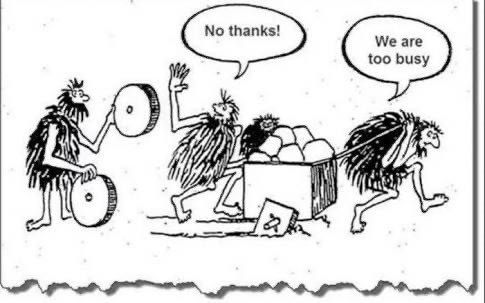
Is busyness preventing your leadership from changing for the better? What are you too busy to change? Sometimes the answer to solving a problem is right in front of us, if only we didn’t ‘filter’ it out and not see it in a state of constant busyness.
When you see this image, what process, system or project in your business / life did you see? This was a question we asked recently in our Executive Leadership Program, and followed up one-on-one in some Executive Leadership Coaching sessions. As highlighted in this recent Forbes article, many leaders have made themselves so busy that they can’t win.
For me, it was a broken task / project management system for completing work. 3 or 4 different systems for allocating and completing work, none that works together – in fact all very quick, short terms fixes to the previous bad system! I had known about this for months but was always ‘too busy’ to fix it properly. My excuse was that ‘it would take too long’, ‘I’ll need to run two systems until I transfer to one’ (despite using 4!), ‘there is more important work to do’ – all excuses seeking to avoid dealing with a problem of my making, that was negatively impacting me.
What Leadership Opportunities For Improvement Are You Avoiding?
So what problem / system or process are you avoiding fixing?
What problem are you ‘too busy’ to fix that impacts you daily?
Trust me – on the other side of dealing with that problem is a far better process – coupled with greater piece of mind.
#avoiding #leadership #change #leadershiptraining #leadershipdevelopment #developingleaders #IMLD
Team Behaviour Out of Isolation – Your Response as a Leader
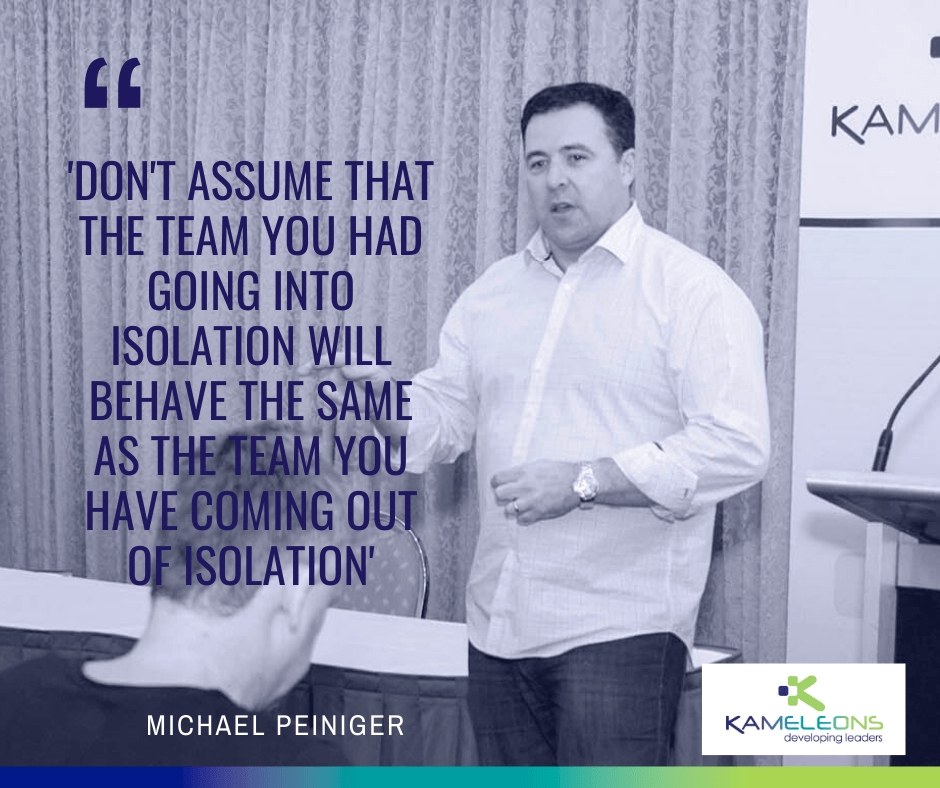
Your response as a leader will have a huge influence on your team behaviour in the next few weeks. Your team will have changed dramatically in the last 8 weeks – beyond schooling arrangements and the comfort / discomfort of working from home or the hours worked. Don’t assume that the team you had going into isolation will behave the same as the team coming out of isolation. Your team members may have a very different relationship with:
🔹You – as both leader, mentor, peer or friend
🔹The business – is the trust still there
🔹Security (both physical and financial)
🔹Challenge – they are looking from work
🔹Autonomy – and micromanagement
🔹How important work is to them overall
🔹The support they are looking from the team
🔹The future they see at your business
There is no need to be afraid of having this conversation with your team – I am sure your relationship as a leader / manager has also changed in relation to a number of the dot points.As a leader, we deal with who we have and the situation in front of us NOW, not what it was. Take the opportunity to bring yourself up to date with your team’s expectations.
#leadership #leadershipdevelopment #leadershipcoach #leader #executivecoaching #coaching #highperformanceteams #developingleaders
Leaders – Have More Small Conversations To Avoid Difficult Ones
Leaders – don’t less physical isolation be the excuse for putting off a difficult conversation – they will be much harder down the road and take a much greater toll – on you and the person that is ‘drifting’.
No one likes big, difficult conversations with team members or family. To avoid them, focus on the little conversations – the ones where you know behaviour has moved slightly away from the goal – and correct it quickly. Lots of little conversations – correcting those times when we can all ‘drift’, saves a lot of bigger, more difficult conversations down the road.
No one deals well in a ‘feedback vacuum’ and it can be easy to go off track – unless there are lots of little conversations bringing us all into alignment.
With so many other tasks taking priority right now, don’t forget to have the little conversations – you don’t need bigger, more difficult ones down the road because of inaction now.
Leadership Assessment Tool: What Makes the Velocity Leadership CheckPoint Unique?
The Velocity Leadership Checkpoint is just that – it is an opportunity to see how your leadership performing at a moment in time.
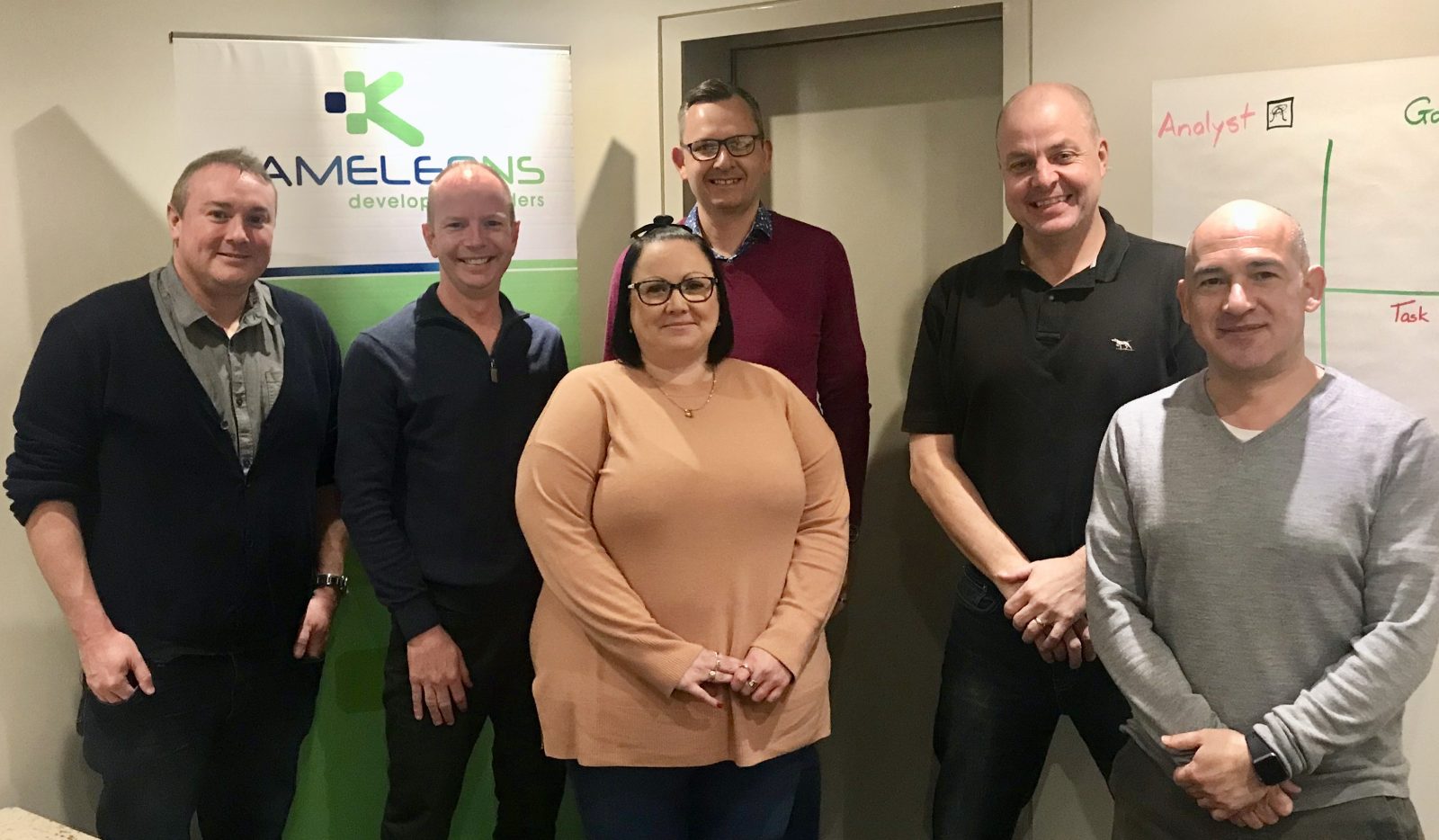
High Performance Team Workshop with Office Choice
One of the best parts of working in the leadership / team /culture space is that I get to work with some truly dedicated people seeking to make a positive change for their business.
I am so grateful to have had the opportunity to work with the senior leadership team at Office Choice Ltd this week for the High Performance Teams workshop. These guys already perform at a strong level and wanted to challenge themselves to perform higher, looking at what crucial conversations and actions they can take to sustain behaviour at the top level.
Thank you Brad O’Brien, Jamie Keyzer, Cameron Osborne, David Williamson, Tilley Raftopoulos and Amanda Vaughan, it was an absolute joy to have worked with you all.
#leadership #crucialconversations #highperformanceteams #developingleaders
What can you start doing, stop doing, do more of or do less of for your team to be high performing?