07Sep

Are You Balanced Or Biased In Your Responsibility and Accountability?

Is your leadership balanced or biased when it comes to responsibility and accountability? When it comes to leading others, leading teams and leading high-performing teams, there is always a balance between getting your own work completed as well as that of your team. Often we can get caught doing all of our own work, and not paying attention to the work of our team. Likewise, we can easily be focussed on the team’s work and needs, and leave our own work to the last minute. Knowing whether you are balanced in your responsibility / accountability or biased – one way or the other – can have a huge impact on how you are perceived as a leader.

Responsibility and Accountability are two key leadership behavioural traits that are measured within IMLD’s Velocity Leadership CheckPoint.

So What Is Better – More Accountable Or More Responsible?

So that we are clear, let me explain the difference between responsibility and accountability.

Responsibility

Your responsibility focuses on your ability to hold yourself ‘to account’. It is ensuring that you keep the promises that you make to others as well as yourself.

Responsibility is a cornerstone of good leaders. A responsible leader accepts and owns the fact that they have a duty to deal with something or have control over someone (or a team). A responsible leader accepts the ability to respond – ‘response – ability’ – and demonstrates the ability to hold themselves to account for their behaviour.

Your Responsibility Score is one of 5 key behaviour traits within the Achieve leadership capability.

Accountability

Your accountability focusses on your ability to hold others ‘to account’ It is ensuring that they keep the promises that they made to you and to others.

Leaders that demonstrate accountability are willing and able to hold someone to task for their behaviours and their actions. Lack of team accountability results in objectives and tasks being delayed, trust in team members eroding and the standing of your team diminished. A leader that holds the team to account achieves more and is more likely to be respected.

Your Accountability Score is one of 5 key behaviour traits within the Altitude leadership capability.

Ideal Settings

Ideally as a leader, you are aiming to be as responsible and accountable as you can be. The aim is to ensure that both you and your team are completely dependable – you deliver what you say you would, at the standard you said it would be completed, at the time you said it would be done by. In the perfect world, this would be done all of the time. But we don’t live in a perfect world! Factors outside our control can have an impact on both responsibility and accountability. Equally, factors within our control can have an impact as well.

A leader who suffers from procrastination is likely to be less responsible – putting off tasks that should have been completed at a specific time. In this manner, they break promises that they may have made to themselves, or promises that they made to others.

A leader who struggles with the ‘uncomfortableness’ of difficult conversations is likely to be less accountable – they will let people ‘off the hook’ rather than having an uncomfortable conversation about getting a task completed.

Many leaders don’t have being responsible and being accountable in balance, and it can have impacts both on themselves as well as their teams.

Impact of Being More Responsible Than Accountable

Being more responsible than accountable can have detrimental impacts on both the leader and their team. Many new leaders have the trait of being more responsible than accountable – they are used to doing work for themselves and are unaccustomed to empowering or delegating to team members. This can become a chronic behaviour if the leader is incredibly task or goal focussed, and enjoy completing things for themselves (or struggle to let go of things). With poor communication, this type of behaviour can also be seen as micro-managing.

When the responsibility skills are more developed than accountability skills, the leader can think things like ‘it is just easier if I do this myself’ rather than teaching or guiding others. Over time, the leader can start to get resentful for the additional work and tasks that they have taken on (but rarely see that this is in part causes by their own behaviour). At the same time, the team can lose interest in helping the leader and get bored, as well as feel micromanaged on the tasks that they have been given (which are often menial because the leader is completing the more difficult tasks). Overall, a leader who is far more responsible than accountable can get work completed themselves (and feel overworked), and create an unhappy work environment.

Impact of Being More Accountable Than Responsible

Being more accountable than responsible can also have detrimental effects on the leader and the team. A leader with these traits holds their team to a greater level of account than they hold themselves which, over time, the team will become resentful of. No team member wants to feel that they are being taken advantage of – particularly when it is obvious that the team is working harder than the leader.

Examples include:

  • the team turning up to a meeting on team but the leader arriving late,
  • the team completing their components of a report and having to wait for the leader to complete theirs,
  • the team cleaning up the kitchen but the leader expecting others to do it for them.

Importantly, the leader does not need to do the same things as the team – there are many times when the leader needs to focus on tasks / actions that only they can do while the team focusses on other things. This is about work rate and effort – and the team noticing that they are consistently working harder than the leader. In this setting, the team can quickly become resentful of working harder than the leader. At the same time, the leader can lose credibility and trust by expecting the team to put in more effort than they are. Overall, a leader who is far more accountable than responsible will create a poor work environment and most likely lose team members in the process.

Low Responsibility and Low Accountability

Having both low responsibility and low accountability will most likely result in a leader not staying a leader for very long. They set low standards for themselves and for the team, and routinely miss deadlines and targets for both. While I am sure we have all experienced leaders that have low traits in both responsibility and accountability – very few of us would regard them as good leaders.

Related Articles on Leadership, Responsibility & Accountability:

The Top 25 Behaviours That Define Great Leaders

The 5 Leadership Behaviours That Drive Great Cultures

Want to Know if You Are More Responsible Than Accountable?

The Velocity Leadership CheckPoint measures 25 leadership behavioural traits, including Responsibility and Accountability. Knowing how you currently behave as a leader is the first step to making a positive difference in leading yourself and your team.

If you would like to know your scores and what you can do to influence them, get in touch with us today.


07Dec

Getting The Balance Right With Difficult Conversations

Getting the balance right with difficult conversations can take some effort. Confession time: Sometimes my explanations are nowhere near as good as the explanations of the leaders and managers I am working with.
That was the case yesterday.


The Emerging Leaders Program Workshop 8 was all about overcoming FEAR (False Evidence Appearing Real) in having a difficult conversation and not be overly empathetic to our team. The NICE acronym (Nothing In Me Cares Enough – To Pull You Up) was used / created, and I thought I had made a beautiful link between the feeling of uncomfortableness you experience in an aircraft varying pitch with the uncomfortableness of having a difficult conversation.


Then the truth bomb in the image was shared by one of the leaders I was working with.


If the FEAR and uncomfortableness of a conversation outweighs the benefits of having it, then it won’t happen. ? Simple yet highly effective!


So as leaders, we can increased our chances of having a meaningful, difficult conversation in two ways:


? Increase you thoughts on the perceived benefits of having the conversation (the benefit for the person, for you, for the business, for the team), and / or


? Decrease the fear and trepidation of having the conversation (it is real or imagined?, can you practise saying it with others)


A huge thank you to the leaders and Managers of the Emerging Leaders Program at Summer Foundation Ltd (in particular Alecia Rathbone and Joanne E Mear for the opportunity) – it has been a pleasure working and sharing with you this year – and really looking forward to the next workshops in 2022!
P.S. Great thought Nicholas K. – I hope the image did it justice.


#developingleaders #emergingleaders #difficultconversations #IMLD

Related Articles:

Do You Avoid Difficult Conversations?

Leaders Push Through The Discomfort Of Difficult Conversations

Related Programs

Looking to develop the skills of your leadership team? Consider one of the following IMLD leadership programs:

Emerging Leaders Program

Executive Leadership Program

07Dec

Talking Leadership With Jack Waddell From Own Your Success

I love to talk about leadership! It was a pleasure to chat with Jack Waddell from Own Your Success as part of the Own Your Success podcast series. There are so many things that a leader needs to be across and aware of, even before considering their own behaviour.

I was asked a relatively simple question – what is the most important leadership trait that a leader can possess right now? ?

Of course – the answer could have been Vision, Purpose, Integrity, Professionalism or Responsibility. It could have been Humility, Empathy, Teamwork, Communication or Confidence. Any of those are important traits for a leader.

At this moment though, my most important leadership trait – CURIOSITY.


I know, this isn’t normally at the top of the list of leadership qualities. Who are we kidding, it isn’t normally on the list of the top 25 traits!

If you have the time, take a moment to hear why on the podcast, and why I believe CURIOSITY is a base behaviour for so many other important leadership qualities (like Purpose, Communication, Empathy and Responsibility) that are needed for 2021 / 2022.

To listen to the podcast, click HERE or on the Image below

#leadership#leaders#curiosity#leadershiptraits#leadershipskills#leadershipbehaviours#IMLD#developingleaders

10Nov

The 7 Questions To Ask When Hiring An Executive Coach

Building a relationship with an executive coach is all about trust. Trust in their expertise, trust in their ability to tailor their knowledge / content to you, trust in their ability to help you achieve results. When choosing an executive coach to work with, you want to make sure that you are going to get results!

In an unregulated industry, it is very easy to get caught up in the hype of a savvy sales pitch or a professional looking website from a prospective executive coach. But there are some simple questions to ask that can differentiate the good from the average, the true partner in developing your skills as a leader as opposed to an expensive waste of time and effort. So we put together 7 tips to help you find your best executive l coach to work with someone worthy of your trust.

1. What is Your Experience as a Leader? 

During my first meeting or call with a potential client, I have found that most leaders don’t know what to ask to determine if I am the ‘right fit’ for them. Often they are looking for someone who they feel comfortable with and have the right chemistry. While that is certainly important, there are many other things you can ask to get the right leadership coach for you. Here are 7 key questions you can ask a potential coach to determine if they are effective and more importantly, the right coach for you.

This might seem obvious, but many consultants calling themselves executive coaches (or executive leadership coaches) have actually never lead people in a team. For all of the learning and reading a person has done, nothing can substitute having experience in a leadership role – making decisions, counselling / coaching and performance managing team members, holding other accountable for results, setting a clear vision – all of the things that you have to do as a leader. Do you want someone who has learned from a book, or someone who has learned what works and what doesn’t from their own trials and experiences?

Ask:

  • ‘What experience have you had leading a team?’
  • ‘What industries have you worked in and for how long?’
  • ‘What was you toughest experience as a leader managing people?’

2. What is Your Own Coaching Style? 

Many leadership coaches follow a formula, a step-by-step guide to coaching that they have learned through an institute, school or other coach. Having a system or a process is important – but you don’t want to work with someone who can’t adjust their format / process / style to meet your immediate needs. If you want to work on a pressing issue that impacts you right now, you shouldn’t have to wait for Session 7 to discuss what you need right now.

In addition, have they developed their own lessons from experience? An effective executive coach has learnt from what they were taught, adapted from their experience and developed their own material. Would you rather work with a leadership coach that can adapt to your needs and discuss an appropriate lesson from personal experience, or someone that needs to refer and check with the book?

Ask:

  • ‘What models do you use to aid your coaching?’
  • ‘Can you outline the type of lessons / learning we can cover?’
  • ‘Have you written your own models / lessons from experience?’

Listen to how they discuss their work and consider the following questions for yourself:

  • ‘Does this sound like it will aid in my development as a leader?’
  • ‘Will this person’s style compliment my own’

3. Who Else Would You Recommend?

Deciding on an effective executive coach is a personal preference – you have to feel comfortable that the person will work with you, guide you, encourage you as well as challenge you. If you decide that the persons style doesn’t suit you, can they / will they recommend another executive coach more suitable? An effective executive / leadership coach knows that they don’t appeal to everyones style and that fit is important. An effective executive coach in the industry will personally know several other effective executive coaches of different styles that they can refer you to. Anyone that can’t is looking more for the sale and less for your welfare and development.

Ask:

  • ‘If you aren’t my best fit as a coach, who else would you recommend and why?’

4. What Recommendations and Success Stories Do You Have?

This question seeks to get past the fancy website and the sales pitch. An effective executive coach will have many recommendations from previous clients that are happy with the work that was completed, and even happier to tell others about it. Look to the person’s website for testimonials and see what they have said about the process, where they started and what they learned.

LinkedIn – A Trusted Resource

Look up some of the testimonial names on LinkedIn – are they real people in leadership roles? Do they work for the person ? (I know, yet several coaches I sought for myself had a small number of reviews, and those were from peers, not clients). Look up the reviews of the business as well as the leadership coach on Facebook, Google reviews and alike – can you find recommendations?

If the person doesn’t have 20 or 30 clear and identifiable recommendations or reviews, they haven’t yet proven themselves as an effective executive coach. It is also important to separate the executive coach from the business – while the business may have many reviews for their stable of coaches, the one in front of you may not. Also ask if you could speak to a previous client about what they got from the coaching process. There is nothing wrong with this! An effective executive coach will not only be able to provide you with names, they will have at least 5 clients they could willingly provide you the phone / contact details of to discuss their coaching. 

To be safe (and sure):

  • Check their website or LinkedIn profile for 20 to 30 recommendations and reviews
  • Check reviews and people giving them are real and not from their own business
  • Separate the reviews of the business from the specific coach

Ask:

  • ‘Can I speak to one or two of your previous clients to discuss what they learnt?’

5. What Resources and Tools Do You Have at Your Disposal?

This is a broad question, and it is seeking to understand the depth of knowledge of the executive coach you will be working with. An effective leadership coach talks about their field of expertise – either publicly in keynote speaking or webinars, online through videos or tutorials, or written in blogs / posts and articles.

Take some time to read, listen or watch what they talk about and see if it resonates with you. Does this person talk about leadership / leadership skills / executive coaching in a way that appeals to you? If you can’t find your chosen executive coach speaking about the topic of leadership in at least one of these mediums, walk away. Effective executive / leadership coaches have a body of work that should be easy to find and demonstrate their understanding of the topic.

In addition, ask to review or discuss their coaching outcomes documents and their confidentiality policy – it should be clear and easily understood. You want to know before you undertake a coaching process who the information you discuss is going to be shared with, how long notes are kept and what the records process entails.

Review:

  • Their website for articles, tutorials and videos
  • Look for Youtube or Vimeo videos speaking on the topic
  • ‘Google’ their name and search for things like ‘leadership articles’

Ask:

  • ‘Where can I find articles or videos of you discussing and explaining leadership and / or coaching?’
  • ‘Can I have a copy of your Coaching Outcomes documents?’
  • ‘What is your policy on confidentiality’

6. What Leadership Assessment Tool Do They Use?

An effective executive coach / leadership coach will use some form of leadership assessment tool to assess the level of skill / behaviour you have at present, and highlight how they will help you develop from that baseline. If they don’t, they will often be guessing and probing in your first couple of coaching sessions – which is OK – but should you have to wait for them to learn about you when they can do it more effectively?

There are a myriad of effective tools in the marketplace, just make sure that the tool provides useful information for you in its own right – it should be in plain language and discuss leadership behaviours. It should also measure behaviours that can develop and grow, that you can easily relate to specific behaviours to improve. The tool used should be more than a personality test, which are often generically written (4 types, 4 colours etc) and not designed to change over time.

Ensure the tool being used can be used again in several months time so that you can have a tangible measure of growth – after all, ‘what isn’t measured, isn’t done’. Most effective leadership coaches can provide you with a PDF of a standard report from their chosen leadership assessment tool, and many will provide an assessment / short debrief as part of their introductory process. 

Ask:

  • ‘What leadership assessment tool do you use?’
  • ‘Can I have a copy of a standard / example leadership report’
  • ‘Do you offer an assessment prior to committing to a coaching contract / process’

7. How Will You Challenge Me (and Yourself)?

While rapport and connection is very important through a coaching process, an effective executive leadership coach is not your best friend. While they will encourage you and cheer you on through your successes, they also need to be able to hold you to account for behaviours that aren’t helping you succeed and challenge your thinking and actions.

An effective leadership coach understands the difference between what you want to hear, and what you need to hear. They won’t be cold and emotionless – an effective leadership coach will discuss your development needs clearly and specifically, identify a path to develop and grow and guide / help / push you towards action to address shortfalls. Don’t get me wrong, coaching can be a fun process! But fun is a welcome by-product; learning and growth is the main objective.

Further, ask about their own coaching process. An effective executive / leadership coach knows that they don’t have all of the answers and are developing and growing themselves. They will have experienced the process of coaching for themselves, they understand the impact, the sticking points in their own development and can discuss it clearly with you. If your chosen coach doesn’t believe in the coaching process, why should you?

Ask:

  • ‘How will you challenge me to develop my skills?’
  • ‘What is the process if we disagree on a way forward?’
  • ‘Do you have a coach at present?’
  • ‘What did you learn through your coaching process?’

Through asking some or all of these questions, you will be able to make an informed decision about your coach being the ‘right fit’ for you. Not only will you know if the person in front of you is an effective leadership coach, but if they are the right leadership coach to assist you in growing and developing as a leader.

Looking to Work With An Executive Coach or Executive Leadership Coach?

The Institute of Management & Leadership Development has worked with hundreds of small business owners, supervisors, team leaders, managers and senior executive to develop their leadership skills through Executive Leadership Coaching. Not only do we have some fo the best coaches in the business, but as stated in the article, we know many other highly effective Executive Coaches that we can recommend if we don’t quite ‘click’.

If you aren’t sure, why not complete our Velocity Leadership CheckPoint? The 25 minute questionnaire and 1 hour debrief of your results will not only provide you with a greater understanding of your strengths and areas of development, it gives you an hour to ‘try before you buy’ and assess the Executive Coach working with you. We havre great faith not only in our coaching process, but also int he ability fo our coaches to adapt their style / process to meet your immediate needs.

Other Useful Articles on Determining an Effective Leadership Coach:

What Do Executive Coaching Clients Say About The Coaching Process?

7 Reasons To Engage An Executive Leadership Coach


22Oct

Diploma of Leadership and Management – Cohort 3, 2021

Well we timed that badly, didn’t we? 😂 First day of ‘freedom’ in Melbourne and we planned day 1 of our new Diploma of Leadership and Management cohort!

Despite the desire (and request) for margaritas before lunch (which I might add seems like a great way to facilitate a Diploma program 😀 ) we kicked off the new program with a bang, starting with the workshop ‘Lead and Manage Team Effectiveness’.

While this workshop is quite broad in topic, it is filled with some fantastic gems of practical knowledge and tips for leaders and managers, including:


🔹 Discovering the values that are important to you when leading,
🔹 Your communication style and how it impacts others,
🔹 Your Team Expectations Checklist (essentially your ‘likes and dislikes’) ❤️❤️❤️ This topic is rarely discussed or aired, and is absolute gold for new leaders or leaders of new teams,
🔹 The important of networking and sharing skills and knowledge,
🔹 The 5 Dysfunctions of a Team, and
🔹 The experiential activity ‘red and blue game’ to test team dynamics and decision making.


A wonderful new group of participants who I am looking forward to working with for the next 9 months! This is the 3rd cohort of the IMLD Diploma of Leadership & Management this year, and each groups knowledge and skills seems to build upon the last. To the members of the senior leadership team at LyondellBasell that made this happen (including Mitchell Killeen, Ray Egan and Lee Hartwell) – thank you for the opportunity to develop the leadership skills and behaviours of your future leaders.


If developing your leadership skills – or the leadership skills of your team – is important to you, consider the Diploma of Leadership and Management.

25Aug

Are You A More Responsible Or Accountable Leader?

Are you a more responsible or accountable leader? When it comes to leading others, leading teams and leading high-performing teams, there is always a balance between getting your own work completed as well as that of your team. Often we can get caught doing all of our own work, and not paying attention tot he work of our team. Likewise, we can easily be focussed on the team’s work and needs, and leave our own work to the last minute.

Responsibility and Accountability are two key leadership behavioural traits that are measured within IMLD’s Velocity Leadership CheckPoint.

So what is better? To be more accountable or more responsible.So that we are clear, let me explain the difference between responsibility and accountability.

Responsibility

Your responsibility focusses on your ability to hold yourself ‘to account’. It is ensuring that you keep the promises that you make to others as well as yourself.

Responsibility is a cornerstone of good leaders. A responsible leader accepts and owns the fact that they have a duty to deal with something or have control over someone (or a team). A responsible leader accepts the ability to respond – ‘response – ability’ – and demonstrates the ability to hold themselves to account for their behaviour.

Your Responsibility Score is one of 5 key behaviour traits within the Achieve leadership capability.

Accountability

Your accountability focusses on your ability to hold others ‘to account’ It is ensuring that they keep the promises that they made to you and to others.

Leaders that demonstrate accountability are willing and able to hold someone to task for their behaviours and their actions. Lack of team accountability results in objectives and tasks being delayed, trust in team members eroding and the standing of your team diminished. A leader that holds the team to account achieves more and is more likely to be respected.

Your Accountability Score is one of 5 key behaviour traits within the Altitude leadership capability.

Ideal Settings

Ideally as a leader, you are aiming to be as responsible and accountable as you can be. The aim is to ensure that both you and your team are completely dependable – you deliver what you say you would, at the standard you said it would be completed, at the time you said it would be done by. In the perfect world, this would be done all of the time. But we don’t live in a perfect world! Factors outside our control can have an impact on both responsibility and accountability. Equally, factors within our control can have an impact as well.

A leader who suffers from procrastination is likely to be less responsible – putting off tasks that should have been completed at a specific time. In this manner, they break promises that they may have made to themselves, or promises that they made to others.

A leader who struggles with the ‘uncomfortableness’ of difficult conversations is likely to be less accountable – they will let people ‘off the hook’ rather than having an uncomfortable conversation about getting a task completed.

Many leaders don’t have being responsible and being accountable in balance, and it can have impacts both on themselves as well as their teams.

Impact of Being More Responsible Than Accountable

Being more responsible than accountable can have detrimental impacts on both the leader and their team. Many new leaders have the trait of being more responsible than accountable – they are used to doing work for themselves and are unaccustomed to empowering or delegating to team members. This can become a chronic behaviour if the leader is incredibly task or goal focussed, and enjoy completing things for themselves (or struggle to let go of things). With poor communication, this type of behaviour can also be seen as micro-managing.

When the responsibility skills are more developed than accountability skills, the leader can think things like ‘it is just easier if I do this myself’ rather than teaching or guiding others. Over time, the leader can start to get resentful for the additional work and tasks that they have taken on (but rarely see that this is in part causes by their own behaviour). At the same time, the team can lose interest in helping the leader and get bored, as well as feel micromanaged on the tasks that they have been given (which are often menial because the leader is completing the more difficult tasks). Overall, a leader who is far more responsible than accountable can get work completed themselves (and feel overworked), and create an unhappy work environment.

Impact of Being More Accountable Than Responsible

Being more accountable than responsible can also have detrimental effects on the leader and the team. A leader with these traits holds their team to a greater level of account than they hold themselves which, over time, the team will become resentful of. No team member wants to feel that they are being taken advantage of – particularly when it is obvious that the team is working harder than the leader.

Examples include:

  • the team turning up to a meeting on team but the leader arriving late,
  • the team completing their components of a report and having to wait for the leader to complete theirs,
  • the team cleaning up the kitchen but the leader expecting others to do it for them.

Importantly, the leader does not need to do the same things as the team – there are many times when the leader needs to focus on tasks / actions that only they can do while the team focusses on other things. This is about work rate and effort – and the team noticing that they are consistently working harder than the leader. In this setting, the team can quickly become resentful of working harder than the leader. At the same time, the leader can lose credibility and trust by expecting the team to put in more effort than they are. Overall, a leader who is far more accountable than responsible will create a poor work environment and most likely lose team members in the process.

Low Responsibility and Low Accountability

Having both low responsibility and low accountability will most likely result in a leader not staying a leader for very long. They set low standards for themselves and for the team, and routinely miss deadlines and targets for both. While I am sure we have all experienced leaders that have low traits in both responsibility and accountability – very few of us would regard them as good leaders.

Related Articles:

The Top 25 Behaviours That Define Great Leaders

The 5 Leadership Behaviours That Drive Great Cultures

Want to Know if You Are More Responsible Than Accountable?

The Velocity Leadership CheckPoint measures 25 leadership behavioural traits, including Responsibility and Accountability. Knowing how you currently behave as a leader is the first step to making a positive difference in leading yourself and your team.

If you would like to know your scores and what you can do to influence them, get in touch with us today.

24May

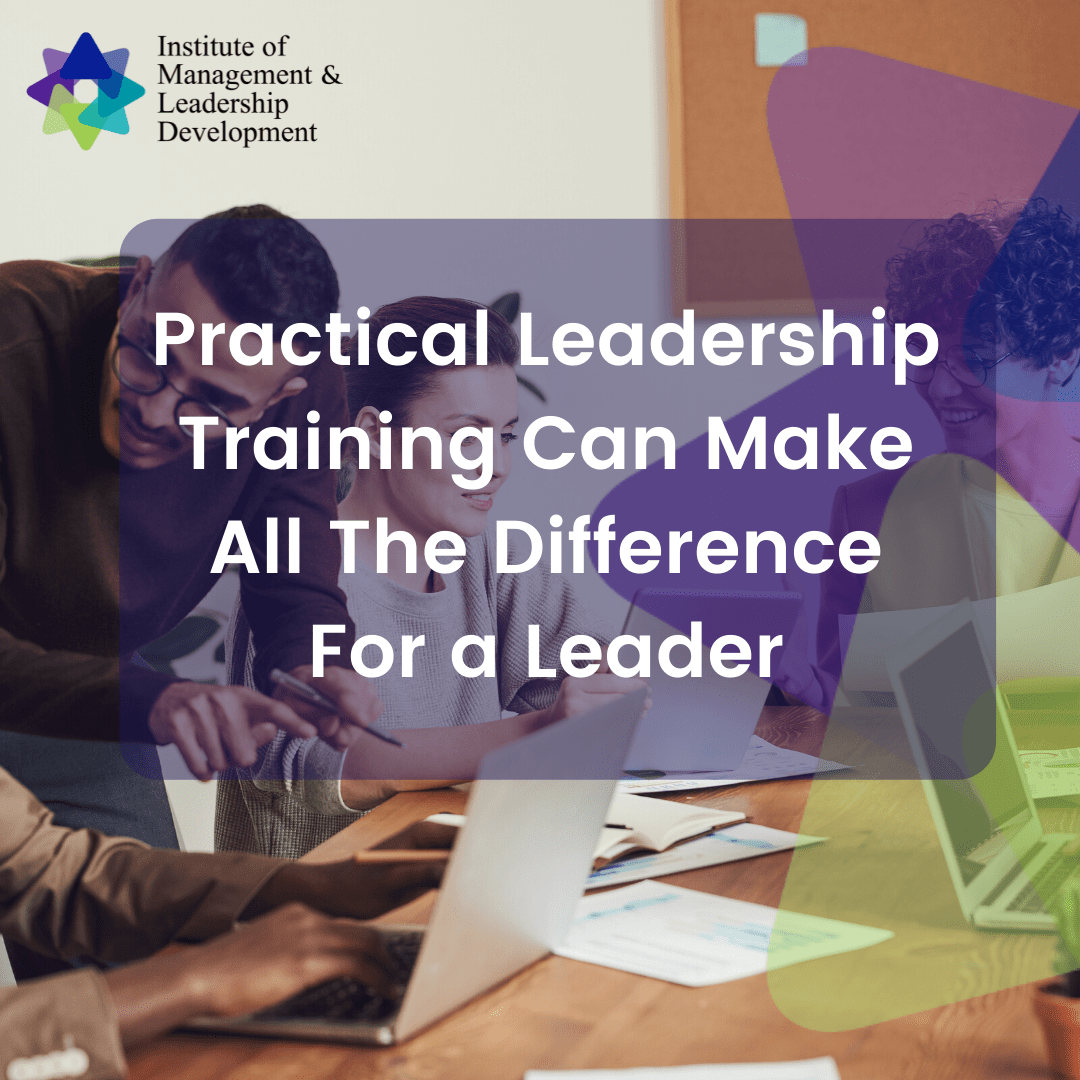
Practical Leadership Training Can Make All The Difference For a Leader

A well designed leadership training activity can be fun and challenging as well as meeting clear learning outcomes. In a recent unit of the Diploma of Leadership & Management (Manage Operational Plan), what looks like play is the culmination of an activity that required planning, communication, resource allocation, budgeting, trial, design, leadership, teamwork, assessment and review.

It was so much fun to work with the Geelong lyondellbasell crew last Friday in the Diploma of Leadership & Management module! When I was in the RAAF, and in particular at Officers’ Training School, I had the opportunity to see first hand how powerful experiential training could be in developing leadership and team skills for leaders and managers.

Practical Leadership Training Puts Theory In Practise

Practical Leadership Training Is Crucial for Leadership Development

The opportunity to observe, evaluate, debrief and learn in a practical way is easily transferred into real life settings. Leadership, team work, planning, communication, negotiation, resilience, patience, difficult conversations – all can be developed in a fun and challenging way with a well designed experiential learning activity. That said

‘An activity is only as good as the learning it provides for the participants’

With these types of experiential activities, the building and assembly of a waterslide is a vehicle for important debriefs on planning, teamwork and leadership.

Interestingly, the behaviours exhibited by leaders and teams in small activities like this often mirror the exact behaviours in the workplace, providing a great opportunity to evaluate norms and behaviours in real time and seek impacts and consequences in a safe environment.

Experiential activities are one of the many ways in which we challenge, coach, train, assessment and work with leaders and managers to develop their leadership and high-performance team skills.

We are forever grateful for the opportunity to work with some amazing leaders, managers and small business owners that seek to develop and challenge their leadership skills and those of their teams.

The Diploma of Leadership & Management

Would your team (or leadership team) challenge itself in an experiential setting to develop their high-performance team or leadership skills? Enquire today via our Contact page or book a Discovery Call to see if the Diploma of Leadership & management is the right fit for your business team.

#leadership #management #leadershipdevelopment #training #coaching #culture #teamwork #leaders #skills #IMLD #developingleaders

21May

Leadership Program – Alex Reynolds Testimonial

IMLDs leadership programs provide leaders with knowledge, behaviour and practical skills required to lead and adapt to a changing work environment. Irrespective of where you are staring from – brand new to leadership or s seasoned professional – IMLD leadership programs have something for you to continue your leadership development journey. From the Emerging Leaders Program, to the Executive Leadership Program and the Diploma of Leadership and Management, there is a leadership program designed to take your skills to the next level. If this sounds like it could be useful for you or members of your team, get in touch with us today.
13May

Leadership Insights: When Did You Last Give Your Best?

When did you last give your best? When was the last time you gave ‘your best’ at something? I mean, your very best? What impact does this have on your leadership and the leadership of your team?
10 years ago (I know!) I posted an article following the video clip below regarding your best.  In the video, the coach pushes his player, and encourages him to go beyond what he thought was possible, inspiring not only himself but the rest of the team.
It got me thinking about two things:

🔹 When was the last time you forced the best out of yourself?
🔹 When was the last time that you asked for the ‘very best’ out of your team members?

https://www.youtube.com/watch?v=-sUKoKQlEC4

Have we forgotten to ask for the best and will accept ‘OK’, ‘near enough’ and ‘a pretty good effort’?
When I was truthful with myself and looked at the last couple of weeks, I can say that I have accepted good and perhaps even above average, but I haven’t given my best (in my opinion) very often recently. Others may not have noticed and rated performances as good and very good (which is pleasing!), the effort, preparation and execution have not been my best.

Consider your team at present.

🔹 Are they giving you their best effort? If not, have you asked for it?

🔹 What can you different today to give your best?

🔹 Have you forgotten to ask for the best and will accept ‘OK’?

🔹 Is ‘near enough’ and ‘a pretty good effort’ good enough for you right now?

When I thought about what I had achieved in the last couple of weeks (and when I was truthful with myself), I can say that I have accepted good and perhaps even above average, but I haven’t given my best (in my opinion) very often recently. In my facilitation and interactions with team members, ‘my best’ was delivered on some very specific occasions. While other people have rated performances as good and very good (which is pleasing!), the effort, preparation and execution have not been ‘my best’.

Consider your team at present. Are they giving you their best effort? If not, have you asked for it?

[This next part os from the original post 10 years ago, but I can still remember it like it was yesterday]

I was reminded on the weekend about good and best efforts from a 10-year old soccer team. I was fortunate to coach the team in the absence of their regular coach, and I asked them the question ‘Are you going to give me your best?’ Needless to say I didn’t get the reaction I hoped for until I elaborated. I told them very clearly what I thought their best effort would look like, how they would play and how they would treat each other on the pitch. I also told them, one by one, what their individual best effort would look like. I them asked for permission to tell them when they were playing their best, and advise them when they weren’t.

It was one of the most exciting games of soccer I have seen. The boys on that team gave their best effort, beating a two-year undefeated side 3-1 (after losing 3 months ago 6-2).

I would love to say the win was based on superior coaching and tactical skill, but that would be very far from the truth! The boys played so well because they were asked to give their best, and their efforts were recognised and reinforced. All I had to do was ask for it and gain permission to tell them if they were / weren’t delivering it.

🔹 When was the last time you asked for the best from your team?

🔹 Equally, when was the last time you did the best you could for your team? What is holding you back?

Ask for the best – you might be surprised by the results.

What can you different today to give your best?
#leadership #success #coaching #leadershipdevelopment #motivation #highperformanceteams #IMLD #developingleaders

Related Posts:

Be The Leader You Wish You Had When You Started

Will You Be A More Humble Leadership Learner in Q2?

12May

Leadership Program Testimonial – Rod Palmer, Lyondellbasell

Thanks, Rod Palmer for the lovely words! I have loved facilitating our leadership program with you and the team at Lyondellbasdell, and I am looking forward to the future sessions.

If you are looking to develop your leadership skills, get your team back on track, build a team culture of high-performance, or just looking to work one on one on some of those ‘less confident’ issues , then book a confidential discovery call with me and let’s see how I can help.

To book go to: https://www.developingleaders.com.au/contact-imld/

#leadership #leadershipdevelopment #success #coaching #IMLD #developingleaders

09Apr

Leadership Development – 5 Lessons Leaders Can Learn From The Military

More often than not, business leaders wait too long to identify, nurture and develop leaders in their business. By the time most businesses consider leadership development training, poor communication, values and behaviours have become so ingrained it can be hard to undo. These mistakes can hamstring both the individuals development and the businesses future. I believe there are 5 lessons managers could learn from leadership development in the military.

08Apr

Diploma of Leadership and Management – Testimonials 2021

IMLDs leadership programs provide leaders with knowledge, behaviour and practical skills required to lead and adapt to a changing work environment. Irrespective of where you are staring from – brand new to leadership or s seasoned professional – IMLD leadership programs have something for you to continue your leadership development journey. From the Emerging Leaders Program, to the Executive Leadership Program and the Diploma of Leadership and Management, there is a leadership program designed to take your skills to the next level. If this sounds like it could be useful for you or members of your team, get in touch with us today.

08Feb

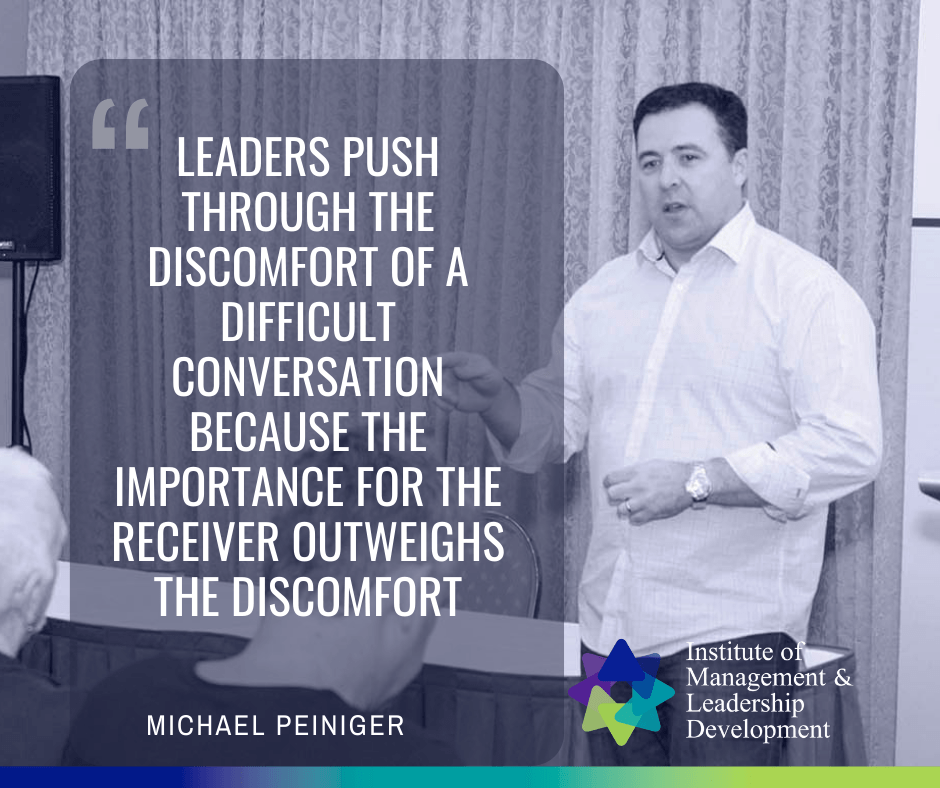
Leaders Push Through The Discomfort Of Difficult Conversations

Do your leaders shy away from having difficult conversations or hard conversations because they make them uncomfortable? What is the impact on you (and on the person you are avoiding) by letting this discomfort rule their behaviour?

No one likes difficult conversations. Good leaders understand the importance of them and the need to keep themselves, their team and their business on track – which sometimes involves a difficult conversation. Every person can ‘drift’ away from what is needed, and an open, clear and honest conversation regarding expectations and meeting them is often required.

Many leaders find these conversations uncomfortable – for themselves or for the other person – and so let the behaviour ‘drift’. The behaviour repeats, gets worse – so does the size of the conversation – so does the avoidance of the issue. Sound familiar?

Good leaders don’t like difficult conversations, but they accept the necessity of them and don’t shy away from their responsibility to have them.

#difficultconversations#leadership#coaching#managers#IMLD#developingleaders

https://www.linkedin.com/company/institutemanagementleadershipdevelopment/?viewAsMember=true

The Way Forward

If you struggle with difficult conversations but understand the importance of having them (for you and for your team members), it might be time to get in touch with an expert who can guide you through. Our Executive Coaches with extensively with leaders, managers and small business owners looking to improve their (and their teams) behaviour, with one aspect being how to prepare for a deliver a difficult conversation. Another way to perform better in difficult conversations is to attend one of our highly rated workshops:

Performance Management Essentials – for having difficult conversations within a structured or formal setting, or

Difficult Conversations In The Workplace for practical tips, solutions and practice

Related IMLD Posts and Articles:

Does Any Leader Like Having Difficult Conversations

Looking To Avoid Big, Difficult Conversations? Have More Small Ones

Only Practice Builds Confidence With Difficult Conversations

How to Have a Difficult Conversation at Work

25May

Team Behaviour Out of Isolation – Your Response as a Leader

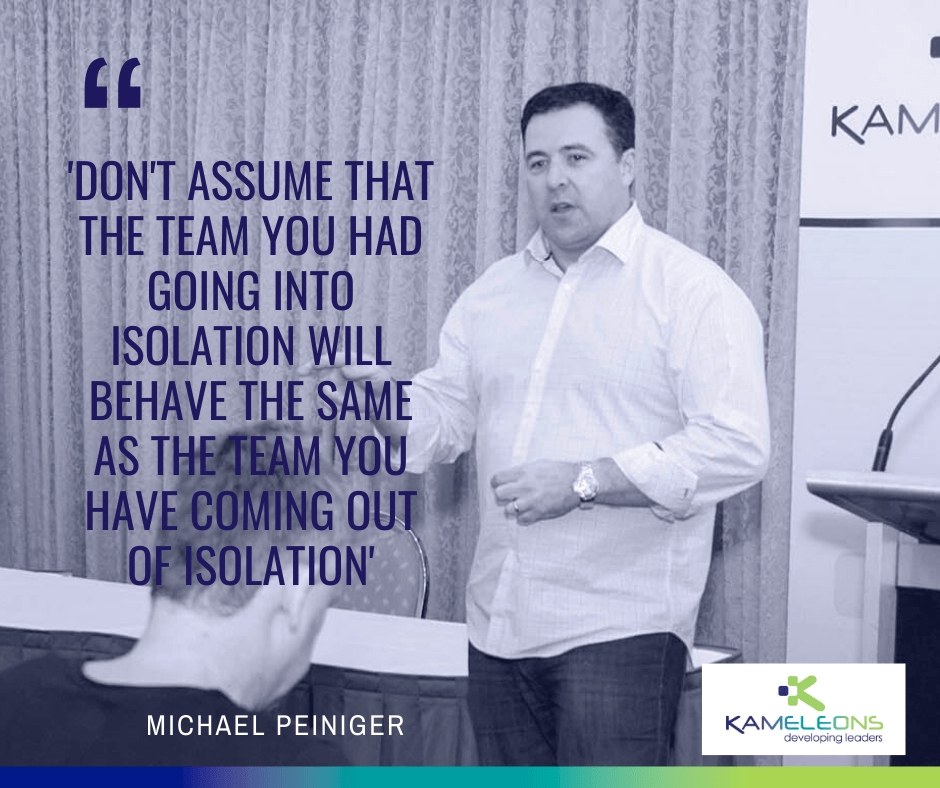
Your response as a leader will have a huge influence on your team behaviour in the next few weeks. Your team will have changed dramatically in the last 8 weeks – beyond schooling arrangements and the comfort / discomfort of working from home or the hours worked. Don’t assume that the team you had going into isolation will behave the same as the team coming out of isolation. Your team members may have a very different relationship with:

🔹You – as both leader, mentor, peer or friend

🔹The business – is the trust still there

🔹Security (both physical and financial)

🔹Challenge – they are looking from work

🔹Autonomy – and micromanagement

🔹How important work is to them overall

🔹The support they are looking from the team

🔹The future they see at your business

There is no need to be afraid of having this conversation with your team – I am sure your relationship as a leader / manager has also changed in relation to a number of the dot points.As a leader, we deal with who we have and the situation in front of us NOW, not what it was. Take the opportunity to bring yourself up to date with your team’s expectations.

#leadership #leadershipdevelopment #leadershipcoach #leader #executivecoaching #coaching #highperformanceteams #developingleaders

20May

Leadership Program Testimonial – Loryn Chaplin

A huge thank you to Loryn Chaplin for recent testimonial following our recent Leadership Program! Wednesday is all about gratitude at IMLD – it is a pleasure to work with dedicated leaders that want to extend knowledge and skills for themselves as well as their teams! To be able to have open, honest and constructive conversations in the workplace is crucial at all times, but especially now with circumstances that can change rapidly. Thank you

#leadership #leadershipdevelopment #leader #highperformanceteams #executivecoaching #coaching #developingleaders #leadershipcoach

12May

Cultural Silos – 4 Reasons For Them and 6 Ways Leaders Can Break Them Down

When it comes to leading managing the dynamics of the people in your team and breaking down cultural silos, near enough is not good enough. When people talk about a business being ‘siloed’ – what they are actually referring to is a business that has created so many people ‘work arounds’ or people ‘avoidances’, that entire business units no longer function effectively. This can stem from something as simple as two Department Heads not liking each other and deciding not to talk. Little ‘work arounds and avoidances – not debating a point you disagree with, avoiding a team member, following an outdated process – all start to add up over time. These people inefficiencies cost businesses millions of dollars in wasted time, effort and frustration, but they are hardly talked about.

Cultural Silos are Created By Leaders

There are 6 simple ways in which cultural silo’s are created by Leaders:

1. People Processes Treated Differently To Business Processes

If a business process is inefficient, businesses utilise principles such as six-sigma or lean to ensure that it is rectified. If the finances of the business are inefficient, a formal review may take place to ensure money isn’t wasted. If safety processes are inadequate, a 5-S process may take place. People inefficiency is treated differently – it is often ignored, done badly, worked around.

2. People Process Ignored Cultural Silos

People behaviours that impact performance can be ignored for many reasons:

  • It seems too easy. ‘This is just common sense’ is a phrase that ignores the simple fact that miscommunication can cause people issues and inefficiency. What is common sense to one person is very different to another – there is no ‘common’ sense. We all have different experiences, emotions, behaviour patterns, preferences and work styles – to assume that something is common sense is really a little naive.
  • Challenging entrenched behaviours can be hard. Very few people actually like conflict – that uncomfortable feeling in your gut when you challenge a behaviour or hold someone to account for something that hasn’t been completed. Instead of feeling uncomfortable in the moment, it can be easier to ignore the problem until it comes up again.

3. People Process ‘Worked Around’

  • It isn’t as important as the bigger things. One of the reasons that a people process is not dealt with is a simple justification – ‘it isn’t important’ or ‘it isn’t as important as xxx’. This often masks a personal discomfort with having a difficult or uncomfortable conversation. People issues and misunderstandings can have a significant impact on performance – choosing to work around them because they seem less important than other things just creates a bigger problem in the future.
  • Collusion. Many people behaviour are ignored for a very simple reason – the leader / manager may have done the same thing themselves. Rather than discussing the problem, they avoid it for fear of what might be said back to them – ‘but, you do that as well’. It results in behaviour collusion – I won’t mention your behaviour if you don’t mention mine – a pattern that can spiral a teams performance.

4. People Process Done Badly

  • It gets Personal. Often when Managers and Leaders seek to address a people problem, they make a fundamental error. Knowingly, unwittingly or accidentally, they  attribute a problem behaviour is attributed to a ‘problem person’. It gets personal. The focus becomes the person (and the implicit judgement of the person that comes with it) rather than the correction or adjustment of the behaviour that caused the issue int he first place. A minor correction in behaviour then becomes a major problem between people – in football parlance, it would be called ‘playing the person, not the man/woman’.
  • It Gets Judgemental. When people issues are raised poorly, people can feel criticised or judged, and their behaviour often fits a familiar pattern – fight (argue, talk back or get angry), flight (don’t listen, avoid or leave) or stand still (hear the words, but are so threatened or surprised by the information, they don’t respond). Responses can be delayed, shared with other people after the fact, or not discussed again bu the people that need to. After a poor interaction, there is a tendency to judge the other person – ‘A always says this’, or ‘B never does the following’ – resulting in a people problem that two people will not attempt to solve.

How Do Leaders Break Down Cultural Silos?

Breaking down solids on a business requires persistent and clear behaviour from all staff, particularly those in senior positions. As mentioned in a recent Forbes article, these behaviours can have large negative consequences. Some of things that can be done to address silo behaviour include:

  1.       Be clear on what you want. Being clear on the behaviour that you want people to demonstrate, as well as clear on the behaviour that is inappropriate. Think on the things that you love your team to do, and well as what you don’t – then tell them.
  2.       Don’t walk past small misunderstandings. Small misunderstandings turn into big misunderstandings and judgements over time – take to time to talk clearly with people if there has been a disagreement or misunderstanding and clarify it quickly.
  3.       Play the Ball, Not the Person. When raising an issue, focus on the behaviour that you want to discuss and how you want it changed, rather than focussing on the person. The person doesn’t need correcting or changing – only the behaviour.
  4.       Avoid ‘Absolute’ Judgements. If someone has made a mistake or done something wrong in the past – it does not mean they should be judged for it forever. Discuss a behaviour, let the person correct it, and move on. If they do the same behaviour again, mention it and correct it again – and be clear why you are doing it.
  5.       Acknowledge Your Errors. There are times when you have to discuss a siloed behaviour that you have done yourself. Acknowledge your behaviour and correct it anyway – and don’t be a hypocrite. Just because you have done something before doesn’t mean that you need to do it again, and neither does the person you are correcting.
  6.       Seek to Understand. Silo’s are not created by bad people – they are most often created by passionate, driven people trying to look after their people. Take the time to understand what the other person / team wants and needs and don’t judge focus on your own needs – you will be far less likely to create a misunderstanding.

Silo’s can be broken down when leaders and managers take the time to not walk past the little things and make relationships between people an important part of business success.

Related IMLD Articles:

a.       Negative Culture = Negative Leadership

b.       The 5 Things Supervisors want from their senior managers

c.       5 Leadership Development Lessons Business can learn from the military