08Aug

What Separates High-Performing Leaders from Average Ones?

Build the Mindset That Drives Career Success

Leadership is often viewed as a skill, something that can be developed and refined over time. But what separates high-performing leaders from those who are merely average? At Developing Leaders, we believe that the difference lies not just in technical ability or industry knowledge, but in the behaviours, mindsets, and traits that truly distinguish exceptional leaders. While anyone can step into a leadership role, becoming a high-performing leader requires a unique blend of personal growth, strategic thinking, and emotional intelligence.

In this article, we explore the key factors that set high-performing leaders apart from the rest and provide actionable insights for anyone looking to elevate their leadership game.

1. VISION AND PURPOSE

Why? The question that kickstarts any good idea. High-performing leaders have a clear, compelling vision. They know where they are headed and can articulate that vision in a way that inspires and mobilises their teams. Average leaders, by contrast, often operate reactively, focusing on short-term tasks without a strategic vision guiding their decisions.

What Sets High Performers Apart:

High-performing leaders align their daily actions and decisions with long-term goals (their Why). They consistently communicate their vision to their teams, ensuring everyone is working toward a common purpose. This clear direction fosters a sense of purpose among team members, motivating them to strive for excellence.

Developing your Purpose:

As a leader, take time to reflect on your organisation’s mission and goals. Craft a vision that resonates with your values and the needs of your team. Communicate this vision regularly and make sure your actions align with it. Inspire your team by showing how their individual contributions connect to the larger purpose.

2. EMOTIONAL INTELLIGENCE (EQ)

Emotional intelligence (EQ) is one of the most significant differentiators between high-performing and average leaders. Leaders with high EQ can understand their own emotions and those of others, managing relationships with empathy, self-regulation, and social skills. They excel at navigating conflict, building trust, and maintaining strong relationships.

What Sets High Performers Apart:

High-performing leaders recognise that leadership is as much about people as it is about processes. They foster a culture of trust, open communication, and collaboration, leading with empathy and sensitivity to their team’s needs. This ability to connect with others at an emotional level builds strong, cohesive teams.

Gaining Higher EQ:

Work on becoming more self-aware by reflecting on how your emotions influence your decisions and actions. Practice empathy by listening actively to your team and understanding their perspectives. Improve your social skills by engaging in open, transparent conversations and resolving conflicts in a positive, constructive manner.

3. DECISION-MAKING ABILITY

High-performing leaders make decisions decisively, even when faced with uncertainty. They are not paralysed by indecision or analysis paralysis, but rather trust their judgment, act with confidence, and stand by their choices. Average leaders often struggle with decision-making, second-guessing themselves and taking too long to act.

What Sets High Performers Apart:

Exceptional leaders have a unique ability to make well-informed decisions under pressure, balancing intuition with logic. They are proactive in seeking diverse viewpoints and gathering the necessary data, but they are also comfortable with ambiguity and know when it’s time to take action.

Using Data to generate Confidence:

Work on making decisions in a timely manner by gathering key facts, weighing options, and trusting your instincts. Involve others when appropriate, but don’t get bogged down by over-analysis. Develop a sense of confidence in your decision-making process, learning from both successes and mistakes.

4. RESILIENCE AND GRIT

High-performing leaders display resilience and grit—traits that enable them to persevere through challenges, setbacks, and periods of adversity. They maintain focus on long-term objectives, even when faced with obstacles. Average leaders, on the other hand, may struggle to bounce back from failures or difficulties, leading to burnout or disengagement.

What Sets High Performers Apart:

Resilient leaders view challenges as opportunities for growth and remain composed during tough times. They instil a similar resilience in their teams, encouraging a mindset that focuses on solutions and forward momentum, even when things get tough.

Building a Strong Mindset:

To build resilience, focus on developing a growth mindset. Embrace failure as a learning opportunity and model perseverance to your team. Cultivate mental toughness by staying calm and composed during stressful situations. Encourage your team to approach challenges with optimism and determination.

5. ADAPTABILITY AND INNOVATION

In today’s fast-paced world, high-performing leaders are agile and adaptable, able to pivot when necessary to stay ahead of the competition. They embrace change and are open to new ideas, technologies, and methods. Average leaders may cling to traditional ways of doing things or resist change, limiting growth opportunities.

What Sets High Performers Apart:

High-performing leaders are constantly seeking ways to innovate and improve. They inspire their teams to think creatively and experiment with new approaches, ensuring their organisation stays relevant and competitive. They understand that progress often requires change and are willing to take calculated risks.

Be Comfortable in the Uncomfortable:

Challenge yourself to step out of your comfort zone and explore new ways of working. Encourage your team to share innovative ideas and experiment with different approaches. Stay informed about industry trends and new technologies, and be open to adjusting your strategy as the market evolves.

6. EMPOWERING OTHERS

High-performing leaders excel at empowering their teams. They recognise that their success is tied to the growth and development of their team members. Instead of micromanaging, they delegate responsibilities, provide resources, and trust their team to deliver. Average leaders often struggle with delegation and may feel the need to control every aspect of the team’s work.

What Sets High Performers Apart:

Great leaders know that empowering others fosters a sense of ownership and accountability. They provide their teams with the tools, support, and autonomy they need to succeed. This trust leads to higher engagement, productivity, and innovation within the team.

How to Respectfully Assess Performance:

Delegate tasks based on your team’s strengths and potential. Provide them with the necessary resources, guidance, and authority to take ownership of their work. Celebrate their successes and offer constructive feedback to help them grow.

7. FOCUS ON RESULTS

High-performing leaders maintain a laser-like focus on achieving results. They are driven by outcomes and are constantly pushing themselves and their team’s to meet or exceed expectations. Average leaders may get distracted by the day-to-day grind, losing sight of long-term objectives or failing to measure their progress.

What Sets High Performers Apart:

Exceptional leaders keep their teams focused on what truly matters. They set clear goals, track progress, and hold themselves and their teams accountable. By constantly pushing for excellence, they drive performance and achieve extraordinary results.

How to Set the SMART Goal:

Set clear, measurable goals for yourself and your team. Break down larger objectives into actionable steps and regularly assess your progress. Stay focused on outcomes, and don’t allow distractions or minor setbacks to derail your efforts.

8. INTEGRITY AND TRUSTWORTHINESS

High-performing leaders are known for their integrity. They adhere to strong ethical standards and consistently do what is right, even when it’s difficult. This commitment to honesty and transparency fosters trust and loyalty from their teams. Average leaders may cut corners or make decisions based on convenience, which erodes trust over time.

What Sets High Performers Apart:

Leaders who act with integrity build strong, lasting relationships based on mutual respect. They prioritise the well-being of their teams and always lead with honesty and fairness, setting an example for others to follow.

Finding Trust in Transparency:

Commit to always acting with honesty and fairness in every decision you make. Be transparent with your team, admit mistakes, and take responsibility for your actions. By demonstrating integrity consistently, you will earn the trust and respect of those around you.

Becoming a High – Performing Leader

Your next big promotion, or career leap lies in the mindset, behaviours, and actions that guide your leadership style. High-performing leaders focus on long-term vision, lead with emotional intelligence, make confident decisions, and inspire their teams through resilience, empowerment, and trust. They continuously adapt to change, remain focused on results, and uphold the highest ethical standards. Mastering these traits takes time, reflection, and intentional effort.

But with dedication, you can cultivate these behaviours and elevate your leadership capabilities to drive greater success in both your personal and professional life.

Developing Leaders specialises in helping you refine these skills through personalised coaching and leadership development programs. If you’re ready to transition from average to exceptional, connect with us today to unleash the high-performing leader you aspire to be!

Still Not convinced? Watch “The Best Thing a Leader Can Do Right Now”

Find the skills you have to develop here – Become The Leader Others Choose To Follow

25Jul

8 High-Impact Leadership Traits Anyone Can Master

Great leadership isn’t born overnight—it’s cultivated through deliberate practice, reflection, and continuous development. Whether you’re a seasoned executive, an emerging leader, or someone striving to improve your leadership abilities, the traits of high-impact leadership can be developed by anyone willing to invest time and effort. These traits serve as the foundation for creating environments where teams thrive, cultures flourish, and organisations succeed.

At Developing Leaders, we believe that leadership is a lifelong journey, one that involves personal growth, adaptability, and resilience.

To help guide you on this journey, we’ve outlined 8 high-impact leadership traits that anyone who is committed to becoming a more effective leader can master. 

1. EMOTIONAL INTELLIGENCE (EQ)

Why It Matters:

Emotional intelligence (EQ) is the ability to recognise, understand, and manage your own emotions, as well as the emotions of others. It encompasses empathy, self-awareness, self-regulation, motivation, and social skills—critical components for any leader. A leader with high EQ can manage conflict more effectively, build trust, and foster a collaborative environment.

How to Master It:

To build emotional intelligence, start by becoming more self-aware. Pay attention to your emotional reactions in various situations and consider how they influence your decision-making. Practice empathy by actively listening to your team members and trying to understand their perspectives. Developing these habits will help you create stronger connections with others and lead more effectively.

2. ADAPTABILITY

Why It Matters:

The ability to adapt is crucial in today’s fast-paced and ever-changing business environment. Whether it’s dealing with unforeseen challenges, technological advancements, or shifts in market trends, a leader must be flexible and open to change. Adaptable leaders are able to pivot quickly, leading their teams through periods of uncertainty with confidence and resilience.

How to Master It:

To develop adaptability, cultivate a growth mindset. Embrace challenges as opportunities for learning rather than obstacles. Be open to feedback, and allow yourself the flexibility to change course when necessary. Encourage your team to adopt a similar mindset, helping them navigate changes with positivity and productivity.

3. DECISION-MAKING PROWESS

Why It Matters:

Effective decision-making is a hallmark of strong leadership. Great leaders know when to make tough decisions, how to weigh options, and when to act with conviction. Strong decision-making instills confidence in your team and drives the organisation forward, even when facing ambiguity or high pressure.

How to Master It:

To improve your decision-making, practice taking a step back to assess all available information before making a choice. Learn to trust your intuition while also considering data and feedback. Engage with your team for input and involve them in the decision-making process when appropriate. This collaborative approach will ensure you are making well-informed, strategic decisions.

4. PURPOSEFUL COMMUNICATION

Why It Matters:

Clear, concise, and transparent communication is one of the most important skills a leader can possess. Whether delivering feedback, aligning teams toward a shared vision, or navigating difficult conversations, communication is the bridge that connects leaders to their teams and stakeholders. Strong communicators inspire trust, reduce confusion, and ensure everyone is aligned.

How to Master It:

Focus on both listening and speaking effectively. Mastering active listening allows you to understand the concerns and ideas of others before responding. Be clear and concise when conveying your own messages. And don’t forget non-verbal communication—your body language, tone, and expressions can convey as much as your words.

Leadership training
Strong communicators inspire trust, reduce confusion, and ensure everyone is aligned.
5. VISIONARY THINKING

Why It Matters:

Leadership without vision is like a ship without a rudder. Visionary leaders inspire their teams by setting a clear direction, explaining the “why” behind their goals, and encouraging innovation and creativity. A compelling vision provides purpose and motivation, helping teams work toward a common objective with passion and commitment.

How to Master It:

To enhance your visionary thinking, spend time reflecting on your organisation’s long-term goals and the broader industry trends. Develop a strategic plan that aligns with the company’s mission while leaving room for innovation and creativity. Engage your team in the vision-building process and make sure they understand how their individual contributions play a role in the broader picture.

6. ACCOUNTABILITY AND INTEGRITY

Why It Matters:

Accountability and integrity are the cornerstones of trust. As a leader, setting an example by holding yourself accountable and adhering to ethical standards sends a powerful message to your team. Leaders who demonstrate integrity gain the respect of their teams, build strong relationships, and create a culture of honesty and transparency.

How to Master It:

Lead by example—be honest in your dealings and take responsibility for both successes and failures. Make it clear that your team is expected to follow suit. Establish systems of accountability that promote ownership of responsibilities at every level. When mistakes occur, address them promptly, learn from them, and demonstrate a commitment to continuous improvement.

7. EMPOWERMENT AND DELEGATION

Why It Matters:

A great leader knows that their success depends on the success of their team. By empowering your team members, you give them the autonomy and resources they need to succeed. Effective delegation allows you to focus on higher-level tasks while helping your team members grow, take ownership, and feel valued.

How to Master It:

Trust your team with important tasks and give them the space to take initiative. Delegate responsibilities based on individual strengths and areas for growth. Provide guidance and support when needed, but resist the urge to micromanage. When your team succeeds, celebrate their achievements and give them credit for their contributions.

Effective delegation allows you to focus on higher-level tasks while helping your team members grow, take ownership, and feel valued.
8. RESILIENCE AND GRIT

Why It Matters:

Leaders inevitably face setbacks and challenges. Resilience and grit allow leaders to persevere in the face of adversity, maintaining focus and determination. These traits help leaders remain optimistic and proactive during tough times, motivating their teams to push forward toward their goals.

How to Master It:

Build resilience by developing mental toughness through mindfulness and stress-management techniques. Embrace challenges as opportunities for growth and learn to bounce back from setbacks. Stay focused on your long-term goals and encourage your team to stay the course, even when obstacles arise. Cultivating a sense of purpose will help you and your team navigate challenges with determination.


MASTERING LEADERSHIP TRAITS FOR PERSONAL AND PROFESSIONAL GROWTH

Leadership is not about a title or position—it’s about action, influence, and the ability to inspire others. These 8 high-impact leadership traits—emotional intelligence, adaptability, decision-making prowess, purposeful communication , visionary thinking, accountability, empowerment, and resilience—are not innate qualities. They can be cultivated and honed by anyone willing to commit to their own growth and development. By focusing on these traits, you can become the kind of leader who drives meaningful change, creates high-performing teams, and leads with confidence and purpose. As you continue to develop as a leader, remember that it’s a journey of continuous learning. Embrace the process, seek feedback, and reflect on your progress. With dedication and effort, these traits can become second nature, making you the kind of leader who inspires greatness in others and leaves a lasting impact on your organisation.

If you don’t trust me yet, watch Simon Sinek’s take on “How do we Actually Build Trust in Teams” here!


At Developing Leaders, we are committed to helping you build these

traits through personalised coaching, leadership programs,

and actionable strategies. If you’re ready to take your leadership to

the next level, book a free introductory appointment with Michael here!

16Jul

The 7 Skills You Need for Strong Team Leadership

The 7 Skills You Need for Strong Team Leadership

Leadership is not just about individual achievements; it’s about guiding a team toward shared goals, fostering collaboration, and empowering others to succeed. Strong team leadership is crucial for building high-performing teams that drive results, navigate challenges, and create a positive organisational culture. At Developing Leaders, we understand that effective team leadership requires a specific set of skills—skills that can be learned, honed, and consistently applied to elevate your leadership potential.

In this article, we outline seven essential skills that every strong team leader needs to master in order to lead effectively, build trust, and drive team success.


1. CLEAR AND TRANSPARENT COMMUNICATION

One of the most critical skills for team leadership is the ability to communicate clearly and transparently. Without effective communication, misunderstandings, confusion, and frustration can arise, leading to disengagement and decreased productivity.

How You Achieve it:

  • Effective communication starts with listening. A strong team leader actively listens to team members, ensuring they understand both the content and the underlying emotions behind what is being said. Be clear, concise, and direct in your messaging. Share relevant information with your team regularly and ensure that your communication is transparent, especially when it comes to challenges or changes. This transparency builds trust and encourages an open, collaborative environment.
2. EMOTIONAL INTELLIGENCE (EQ)

Emotional intelligence (EQ) is a key driver of strong team leadership. It involves understanding and managing your own emotions, as well as recognising and influencing the emotions of others. High EQ leaders are better equipped to manage conflicts, build stronger relationships, and create a positive work environment.

How You Achieve it:

  • To improve your emotional intelligence, begin by becoming more self-aware. Reflect on your emotional reactions and how they affect your decisions and relationships. Practice empathy by putting yourself in your team members’ shoes and listening without judgment. Cultivate self-regulation to manage your emotions in stressful situations and remain composed when challenges arise. High EQ leaders foster an environment where team members feel heard, valued, and supported.


3. DELEGATION AND EMPOWERMENT

Delegation is one of the most important skills for effective team leadership. Strong leaders know they cannot do everything themselves, so they empower their teams by distributing tasks according to individual strengths. Delegation helps to develop team members, build trust, and improve overall team performance.

How You Achieve it:

  • Effective delegation begins with understanding the strengths and development areas of each team member. Assign tasks that align with their skills while also providing opportunities for growth. Be clear about expectations and give them the autonomy to complete the task in their own way. Support your team, but resist the urge to micromanage. When team members feel trusted and empowered, they are more engaged and motivated to perform at their best.
4. CONFLICT RESOLUTION

Conflict is inevitable in any team environment, but how its handled can make all the difference. Strong team leaders are adept at navigating and resolving conflict in a way that is constructive and fair. By addressing conflicts early and fairly, leaders can prevent them from escalating and maintain a positive, collaborative atmosphere within the team.

How to Master It:

  • Develop your conflict resolution skills by staying calm and objective when conflicts arise. Approach each situation with a mindset of finding a solution rather than assigning blame. Encourage open communication between team members involved in the conflict and help them focus on the shared goal. When mediating, listen to all parties involved, seek to understand their perspective, and guide them toward a fair and mutually beneficial resolution. The goal is to foster a solution-oriented environment where conflicts are seen as opportunities for growth and understanding.
5. DECISION-MAKING AND PROBLEM SOLVING

As a team leader, you’ll face numerous decisions—both big and small—on a regular basis. The ability to make sound, timely decisions is critical for team success. Strong leaders don’t just solve problems as they arise; they also anticipate challenges and proactively find solutions before issues escalate.

How You Achieve it:

  • Mastering decision-making and problem-solving requires a balance of intuition, data, and input from your team. Take time to gather all relevant information, weigh the pros and cons, and consider both short-term and long-term impacts. Involve your team in the decision-making process when appropriate, as this promotes a sense of ownership and collaboration. Be decisive, but also willing to adjust your approach if new information arises. When problems occur, focus on solutions, not blame.
6. TRUST-BUILDING AND RELATIONSHIP MANAGEMENT

Trust is the foundation of any strong team. Without trust, collaboration breaks down, productivity suffers, and morale declines. Strong team leaders know that building and maintaining trust within their teams is essential for creating a high-performance culture.

How to Master It:

  • Building trust starts with being consistent and reliable. Follow through on your commitments, be honest, and admit mistakes when they happen. Encourage open, transparent communication, and always lead by example. Demonstrate respect for each team members contribution’s and value the perspectives they each share. When your team trusts you, they are more likely to be engaged, committed, and motivated to achieve team goals.
7. VISIONARY THINKING AND GOAL SETTING

To guide your team to success, you need a clear vision of where you want to go and the ability to inspire your team to work toward that vision. Strong leaders set clear, measurable goals and motivate their teams to achieve them. Visionary thinking helps teams understand not only what needs to be done but also why it matters.

How to Master It:

  • Start by crafting a compelling vision for your team that aligns with the broader organisational objectives. Break down that vision into actionable, measurable goals that everyone can work toward. Make sure your team understands the “why” behind each goal, and regularly track progress. Communicate the vision frequently to remind everyone of the bigger picture, and celebrate milestones along the way. When your team understands the vision and sees how their work contributes to it, they are more likely to stay motivated and engaged.
DEVELOPING LEADERS WITH STRONG TEAM SKILLS

Teamwork Remains the One Sustainable Competitive Advantage that has been Largely Untapped

Pat Lencioni “The 5 Dysfunctions of a Team”

Strong team leadership is about much more than just directing others. It’s about inspiring and empowering your team, fostering collaboration, and guiding them toward shared success. By mastering these seven essential leadership skills—clear communication, emotional intelligence, delegation, conflict resolution, decision-making, trust-building, and visionary thinking—you can elevate your leadership ability and create a high-performing team that thrives.

At Developing Leaders, we specialise in helping you build these skills through personalised leadership coaching, training, and support. If you’re ready to enhance your team leadership skills, connect with us today to start your pursuit in becoming a more effective, inspiring, and impactful leader.

Book Your Free Introductory Appointment

01Jul

Strategies for Tough Leadership Conversations

How to Handle Tough Conversations at Work: Strategies for Effective Leadership

Difficult conversations are an inevitable part of leadership. Whether addressing performance issues, resolving conflicts, or discussing sensitive topics, leaders are often tasked with navigating emotionally charged or uncomfortable discussions. The ability to handle these conversations with poise and effectiveness is a key differentiator between high-performing leaders and those who struggle to foster trust and collaboration within their teams. At  Developing Leaders ,we emphasise the importance of mastering this skill to ensure that leaders can manage challenging interactions with confidence, emotional intelligence, and clear communication.

THE IMPORTANCE OF HANDLING DIFFICULT CONVERSATIONS

Expanding on the revolutionary business classic Crucial Conversations – Tools for Talking When Stakes are High difficult conversations can often make or break a leader’s relationship with their team. When approached poorly, these discussions can lead to misunderstandings, resentment, and disengagement. However, when handled well, they can foster growth, build trust, and drive positive change. Strong leaders don’t shy away from these conversations but instead approach them as opportunities to address underlying issues, resolve conflicts, and create a more cohesive and productive work environment. Effective communication is crucial for maintaining a harmonious workplace, particularly when dealing with personal or professional challenges.

The goal should always be to achieve understanding, clarity, and a positive resolution— without creating further tension or animosity.

1. PREPARATION: Setting the Stage for a Productive Conversation

The first step in handling any difficult conversation is thorough preparation. When facing a tough discussion, it’s easy to fall into the trap of procrastination or avoiding it altogether. However, delaying such conversations only escalates the issue over time. According to

Developing Leaders, the key to success in these situations lies in careful preparation using models like IDRIFT, which stands for:

Intention:

Understand the purpose of the conversation. What do you want to achieve, and how can you frame your approach to support that outcome?

Diagnosis:

Identify the root cause of the issue. Is it a behavioural problem, a misunderstanding, or a performance-related concern?

Respect:

Approach the conversation with respect for the other person’s perspective, acknowledging that difficult topics require sensitivity.

Information:

Gather all necessary facts and context to support your discussion and avoid making it personal or emotional.

Feelings:

Be mindful of both your own emotions and those of the other party. Recognise that feelings often play a large role in difficult conversations.

Time:

Choose the right time and environment to have the conversation. Ensure privacy and sufficient time to address the issue thoughtfully. Preparing for a difficult conversation requires not just gathering facts but also reflecting on your emotional triggers and the desired outcome.

When you approach the conversation with intention and respect, you are better positioned to lead it to a constructive conclusion.

If you want to delve deeper into the key aspect of the IDRIFT Model, read this earlier article Leave Your Emotions Behind! It focuses on the importance of inoculation and emotions with their subsequent impacts on all parties if not done correctly.

2. CONFIDENCE AND EMOTIONAL REGULATION: Maintaining Control

One of the most important aspects of handling difficult conversations is emotional regulation. During these discussions, emotions often run high—whether your own or the other person’s. Losing control can cause the conversation to spiral into conflict rather than resolution. This is why it is essential for leaders to maintain composure and confidence.

Emotional regulation involves recognising your own “hot buttons”—the phrases, behaviours, or triggers that might lead to an emotional reaction. By preparing ahead of time, you can better manage these reactions and ensure that your responses remain rational and composed.

Leaders who can stay calm and regulated are able to steer the conversation back to the issues at hand, instead of getting caught up in the emotional undercurrent.

Additionally, confidence is vital. If you approach the conversation with uncertainty, it can undermine your authority leading to confusion within your team. Be clear in your communication, even when the topic is uncomfortable. Articulate the points without hesitation or becoming defensive, instead set a composed tone for the entire conversation.

3. ACTIVE LISTENING: Understanding Before Responding

Active listening is a cornerstone of successful communication. It goes beyond merely hearing what someone says; it involves listening with the intent to understand their perspective, emotions, and underlying concerns. During difficult conversations, practicing active listening helps create a safe space for both parties to express themselves without fear of judgment.

By focusing on the speaker and refraining from interrupting or formulating responses while they talk, leaders can gather important insights that may not be immediately apparent. Listening also involves asking open-ended questions that encourage the other person to elaborate on their feelings or points of view. This not only demonstrates empathy but also provides more context, which can help in finding a resolution.

When you listen actively, it shows that you respect the other person’s viewpoint, even if you disagree with it. This can defuse tension and promote mutual respect, making it easier to move toward a solution that benefits both parties

4. DE-ESCALATION TECHNIQUES: Keeping The Conversation Constructive

Difficult conversations often trigger defensive or emotional reactions. When faced with heightened emotions, it’s critical to de-escalate the situation and guide the conversation back to a productive place. Several de-escalation techniques can help you manage the conversation effectively:

 Stay calm:

  • The first step in de-escalation is maintaining composure yourself. Responding with calmness helps to neutralise the situation.

Use neutral language:

  • Avoid inflammatory or accusatory words, which can make the other person feel attacked. Instead, focus on “I” statements, such as “I’ve noticed…” or “I feel concerned about…” to share your perspective without sounding judgmental.

Validate emotions:

  • Acknowledge the other person’s feelings, even if you don’t agree with them. A simple “I can see this is frustrating for you” can go a long way in calming the situation.

Take a break if needed:

  • If emotions are running too high, suggest pausing the conversation to give both parties time to cool down and reflect.

These techniques help you manage the emotional dynamics of the conversation, allowing both parties to express themselves without it becoming a heated argument.

5. FOCUS ON RESOLUTION: Moving Toward a Solution

The ultimate goal of a difficult conversation is resolution. Instead of focusing solely on the problem or assigning blame, effective leaders turn the discussion toward finding a solution. This involves collaboration and brainstorming together on how to address the issue at hand.

During the conversation, encourage the other person to share their ideas for resolving the issue. Discuss potential solutions and make sure to agree on a course of action that is fair and mutually beneficial. In some cases, setting clear expectations for future behaviour or outlining steps for improvement can provide both parties with a sense of closure.

Additionally, it’s important to follow up after the conversation to ensure that the solution is being implemented and to offer further support if necessary. This demonstrates commitment to resolving the issue and helps maintain positive working relationships going forward.

6. PRACTICE AND CONTINUOUS IMPROVEMENT

Handling difficult conversations is a skill that can be improved over time with practice. At Developing Leaders, we offer leadership development programs designed to help leaders enhance their ability to handle difficult conversations.

Our Difficult Conversation Simulator allows leaders to engage in realistic role-playing scenarios with trained actors, providing the opportunity to refine communication techniques, receive feedback, and build confidence in a supportive environment.

By practicing these conversations in real time, leaders can better prepare for the challenges they’ll face in the workplace, ensuring they can handle even the toughest discussions with ease and confidence.

Turning Difficult Conversations into Opportunities

Difficult conversations are never easy, but with the right strategies and mindset, they can be transformative. When handled with preparation, emotional regulation, active listening, and a focus on resolution, these conversations can lead to stronger relationships, increased trust, and better team dynamics. At Developing Leaders, we believe that by improving your communication skills and becoming comfortable with uncomfortable conversations, you can navigate workplace challenges with confidence and create a more positive, productive environment for everyone involved.

For more resources and support on improving your leadership skills and handling difficult conversations, visit Developing Leaders and explore our workshops, coaching programs, and leadership tools.

27Jun

The Leader’s Guide to Building and Rebuilding Trust with Teams

The Leader’s Guide to Building and Rebuilding Trust within Teams

Trust is the foundation of effective leadership. Without it,

communication breaks down, collaboration suffers, and team morale

plummets. Whether you’re leading a small business, a team, or an

organisation, establishing and maintaining trust is essential for

long-term success. But what happens when trust is lost, and how can it

be rebuilt? In this article, we’ll explore the critical role trust plays

in leadership and offer strategies for both building and repairing it.


 Why Trust is Crucial For Leadership

Trust isn’t just a “nice-to-have” trait for leaders—it’s a

non-negotiable. According to research, teams with high trust are more

engaged, productive, and open to feedback, making trust a cornerstone of

organisational success. Trust also allows leaders to delegate

effectively, knowing that their team members can make decisions and take

action autonomously. Leaders who demonstrate trustworthiness inspire loyalty, reduce

turnover, and create a culture of transparency and mutual respect. At

Developing Leaders, we focus on helping leaders understand the role

trust plays in their ability to influence and guide their teams toward

success.


HOW TO BUILD TRUST AS A LEADER

Building trust is a gradual process, but the effort is well worth it.

Here are key strategies that leaders can use to establish trust within

their teams:

1. LEAD BY EXAMPLE

Leaders who model the behaviours they want to see in their teams build

credibility and trust. When your actions align with your words, you show

integrity. Consistently demonstrating honesty, transparency, and

accountability sets the tone for the entire team. As a leader, if you

hold yourself to high ethical standards, your team will be more likely

to follow suit.

Leading by example also means owning up to your mistakes and showing

vulnerability. When leaders admit errors and demonstrate how to learn

from them, it strengthens their relationship with the team and fosters

an environment where others feel safe to do the same.

2. COMMUNICATE TRANSPARENTLY

Open communication is the bedrock of trust. When leaders share

information transparently, they avoid confusion and minimise the risk of

rumours and misunderstandings. Regularly communicating not only the goals

and expectations of the team but also any challenges or changes helps to

create an atmosphere of trust.

It’s also crucial to listen actively. Leaders who take the time to

understand their team’s perspectives and show empathy build deeper

relationships. By genuinely listening and responding thoughtfully,

leaders demonstrate that they value the input of their team members.

3. EMPOWER YOUR TEAM

Trust is built when leaders demonstrate confidence in their team

members. Empowering others to take initiative, make decisions, and lead

projects shows that you believe in their capabilities. Micromanaging, on

the other hand, erodes trust by implying that you don’t trust your

team’s judgment.

Encourage your team to take ownership of their work, and support them

with guidance and resources. When your team members feel trusted to

perform their roles, they’re more likely to trust you in return.

4. PROVIDE CONSTRUCTIVE FEEDBACK

Trust also grows through consistent and constructive feedback. A leader

who provides regular, specific, and actionable feedback shows that they

care about their team’s development and success. Feedback should be both

positive and constructive, recognising achievements while offering

guidance for improvement.

Creating a feedback-rich environment fosters trust because it signals to

the team that their performance is valued and that there’s always room

for growth.

5. BE CONSISTENT

Trust thrives on consistency. A leader who is unpredictable or

inconsistent in their decisions, behaviour, or communication undermines

the sense of trust in the team. Leaders should strive to be reliable,

making decisions that align with the organisation’s values and

principles. By being consistent in both words and actions, leaders

create stability and predictability, which are key to building trust

over time.


REBUILDING TRUST AFTER IT’S BEEN BROKEN

While building trust is an ongoing process, it can be shattered quickly.

Whether it’s due to poor communication, a broken promise, or unethical

behaviour, regaining lost trust can be challenging. However, it’s not

impossible. If you’ve lost the trust of your team, here are steps you

can take to rebuild it:

1. ACKNOWLEDGE THE ISSUE

The first step in rebuilding trust is to acknowledge what went wrong.

Ignoring or minimising the issue only deepens the breach. Be transparent

and honest about the situation, and take full responsibility for any

mistakes. When you own up to your actions, it shows humility and

integrity, which are critical in the trust-rebuilding process.

2. APOLOGIZE SINCERELY

A heartfelt apology goes a long way in mending damaged relationships.

Apologising doesn’t just mean saying “I’m sorry” but also

explaining what happened, acknowledging the hurt caused, and expressing

a commitment to doing better moving forward. Your apology should be

specific, empathetic, and focused on the impact your actions had on the

team.

3. TAKE ACTION TO MAKE AMENDS

Words alone are not enough to rebuild trust—leaders must take concrete

steps to make amends and show they’re committed to change. If there

was a breakdown in communication, implement new practices to ensure

transparency. If trust was broken due to unethical behaviour, demonstrate

a commitment to higher ethical standards. By taking decisive actions,

you show that you’re serious about restoring trust and learning from

past mistakes.

4. DEMONSTRATE CONSISTENCY OVER TIME

Rebuilding trust takes time, and consistency is essential during this

process. Consistently follow through on your promises, be reliable, and

maintain the standards of behaviour that you expect from your team. Over

time, your actions will help rebuild confidence, but it’s crucial to

show that the change is not temporary but a permanent shift.

5. SEEK FEEDBACK AND OPEN DIALOGUE

Encourage your team to share their concerns and feelings. This may be

uncomfortable, but it’s necessary for healing. By creating a safe

space for feedback, you demonstrate openness to improvement and allow

team members to feel heard. Actively seek feedback and use it to guide

your actions as you work toward rebuilding trust.


TRUST AS A LEADERSHIP CORNERSTONE

Trust is not just the foundation of effective leadership—it’s the

glue that holds teams together, fuels collaboration, and drives

performance. Leaders who prioritise building and maintaining trust will

see stronger team dynamics, increased productivity, and greater employee

engagement. Whether you’re just starting to build trust or working to

rebuild it after a breach, the steps outlined above can help you

navigate these challenges and lead your team to success.

At Developing Leaders we provide Executive Coaching and

 Leadership Development Programs designed to help leaders cultivate trust, foster

collaboration, and develop the skills to lead with integrity. Through

our personalised coaching and real-world strategies, we support leaders

in building stronger, more effective teams.


For more insights into leadership, trust-building, and team dynamics,

explore our resources at Developing Leaders. Alternatively, you can watch this Youtube video summarising one of our Workshops – High Performing Teams Workshop

17Mar

The 6 Elements of Great Company Culture


A thriving company culture is more than a buzzword; it’s a key driver of long-term success. It influences everything from employee satisfaction to business outcomes. Leaders play a pivotal role in shaping this culture, and focusing on the following six elements can help build a resilient and high-performing environment.


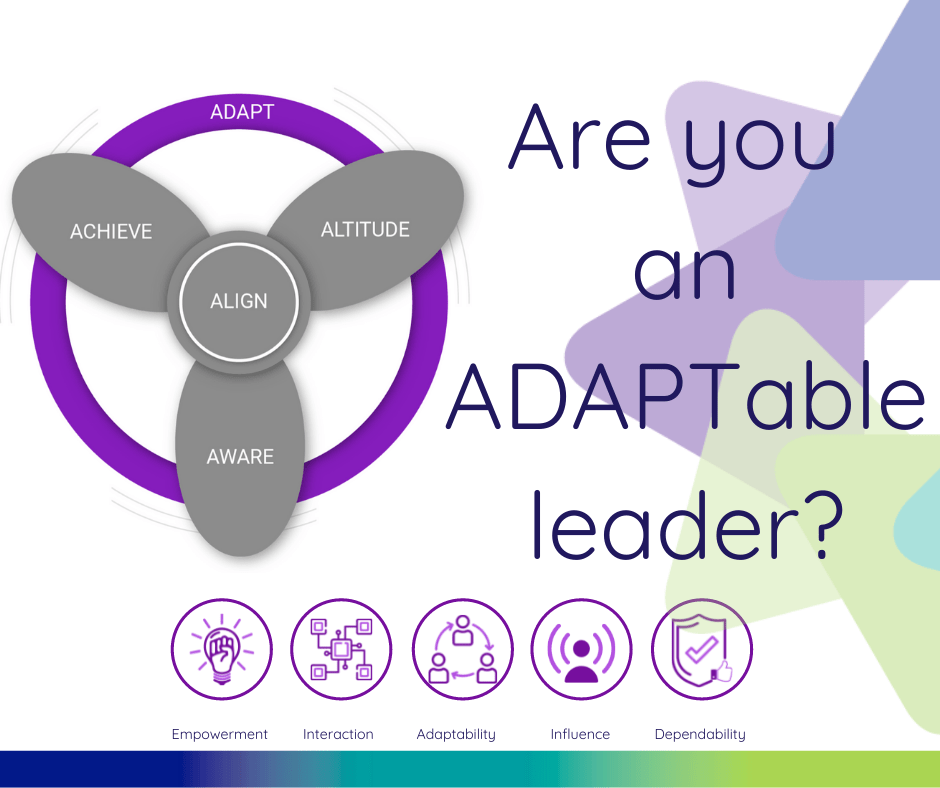
1. Alignment

Alignment ensures that every team member understands and works toward shared organizational goals. Leaders must clearly define the company’s vision and values and integrate them into daily operations. When employees see how their work contributes to larger objectives, it fosters unity and motivation. Regular communication and strategic goal-setting ensure teams remain aligned, even in dynamic environments.


2. Awareness

Awareness involves cultivating an environment of transparency and open communication. Leaders should encourage feedback from all levels, creating a culture where employees feel heard and valued. This includes seeking input not just during performance reviews but through ongoing, informal discussions. Awareness also means leaders remain attuned to team dynamics, identifying and addressing issues before they escalate. A culture of mutual understanding builds trust and strengthens collaboration.


3. Achievement

Achievement-oriented cultures focus on consistently meeting goals while maintaining accountability. Leaders should set clear expectations and empower teams to deliver on promises. Celebrating successes, big or small, reinforces a culture of accomplishment. However, it’s equally important to approach missed targets as opportunities for learning rather than blame. By fostering a problem-solving mindset, leaders can drive sustained performance and innovation.


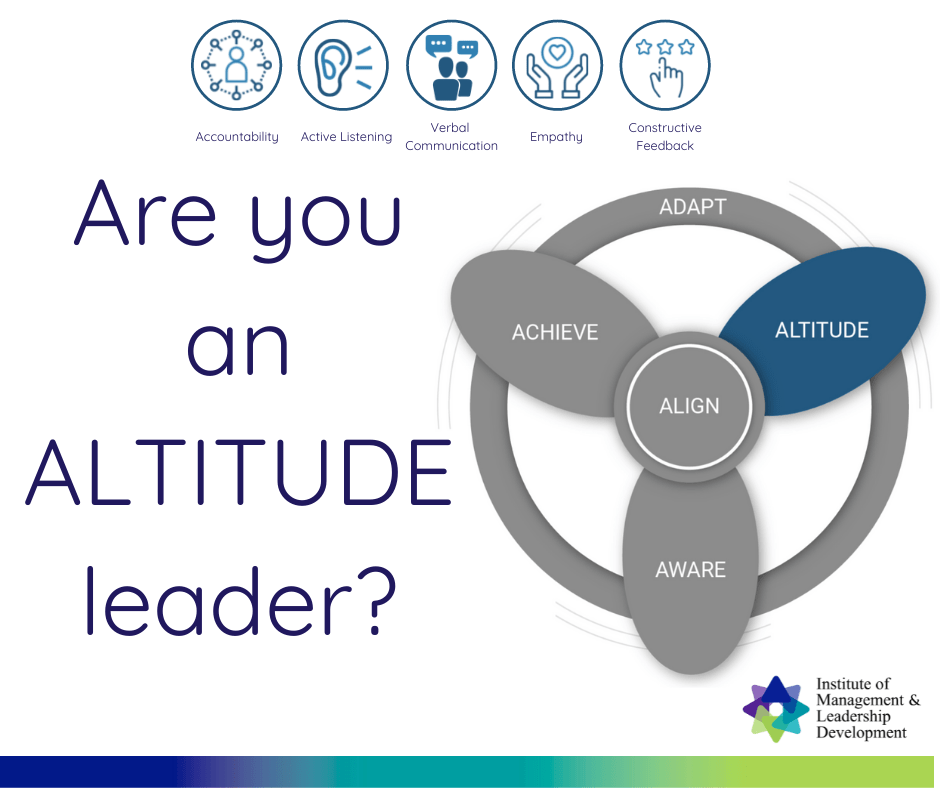
4. Altitude

Altitude reflects a team’s capacity to aspire higher and consistently improve. Leaders contribute to this by holding themselves and their teams accountable, fostering constructive feedback loops, and promoting positive behaviors that inspire growth. Altitude also involves creating an uplifting environment where individuals feel motivated to push boundaries and exceed expectations. A focus on positive reinforcement, coupled with clear developmental pathways, helps build momentum for organizational success.


5. Adaptability

Adaptability is the ability to navigate and thrive amid change. In today’s fast-paced business world, organizations must be agile, ready to pivot in response to market shifts or internal challenges. Leaders who encourage flexibility and resilience within their teams create a culture that thrives under pressure. Empowering employees to make decisions during uncertain times and fostering a mindset that views change as an opportunity, not a threat, are hallmarks of adaptable cultures.


6. Empowerment

Empowerment is the linchpin of employee engagement. When leaders delegate authority and trust their teams, it fosters a sense of ownership and autonomy. Empowered employees are more likely to take initiative, innovate, and commit to their roles. Leaders can encourage this by providing the tools, training, and support teams need to excel, while stepping back to allow them the space to grow and make impactful contributions.


Bringing It All Together

Building a strong company culture requires intentionality and consistent leadership. By focusing on these six elements—Alignment, Awareness, Achievement, Altitude, Adaptability, and Empowerment—leaders create environments where teams feel valued, inspired, and equipped to excel. These cultural pillars not only drive performance but also enhance employee retention and satisfaction, leading to long-term organizational success.

Leaders who invest in these cultural elements are better prepared to navigate challenges, seize opportunities, and sustain growth in an ever-changing world. For a deeper dive into actionable strategies for fostering great company culture, visit Developing Leaders

.

14Jan

The 25 Essential Leadership Skills Every Leader Should Know


In the ever-evolving landscape of leadership, success hinges not only on strategy but on a leader’s ability to inspire, adapt, and drive meaningful change. As we approach 2025, these 25 essential leadership skills serve as the foundation for every leader striving to make an impact.

1. Emotional Intelligence (EQ)

Understanding and managing emotions—both your own and others’—is at the core of effective leadership. High EQ leaders foster trust, enhance collaboration, and defuse conflicts with empathy and tact.

2. Vision Setting

A clear, compelling vision galvanizes teams toward a common goal. Leaders must articulate this vision and align team efforts to achieve it.

3. Strategic Thinking

Great leaders anticipate challenges and opportunities, crafting plans that ensure long-term success while remaining adaptable.

4. Communication

The ability to clearly convey ideas, listen actively, and adapt communication styles to diverse audiences is critical for any leader.

5. Adaptability

With change being a constant in today’s world, leaders must pivot quickly and guide their teams through uncertainty.

6. Decision-Making

Decisiveness, balanced with careful analysis, helps leaders make timely choices that benefit the organization.

7. Conflict Resolution

Addressing disagreements constructively strengthens team cohesion and prevents minor issues from escalating.

8. Delegation

Leaders maximize their team’s potential by entrusting tasks and empowering others, ensuring they focus on strategic priorities.

9. Feedback Skills

Delivering constructive, actionable feedback fosters growth while maintaining morale.

10. Team Building

Creating cohesive, high-performing teams is a hallmark of successful leadership.

11. Cultural Intelligence

Understanding and respecting diverse perspectives enable leaders to create inclusive environments.

12. Time Management

Efficient leaders prioritize effectively, balancing short-term demands with long-term goals.

13. Resilience

Staying composed and effective during crises is essential for navigating leadership challenges.

14. Accountability

Holding yourself and others responsible for outcomes builds trust and drives performance.

15. Innovation

Encouraging creativity and embracing new ideas help organizations stay competitive.

16. Motivational Skills

Inspiring teams to reach their full potential ensures sustained success.

17. Financial Acumen

Leaders need to understand financial metrics to make informed decisions.

18. Technical Proficiency

A baseline understanding of relevant tools and technologies enhances credibility and decision-making.

19. Ethical Judgment

Leaders must act with integrity, setting a standard for the organization.

20. Negotiation

Skillful negotiation balances organizational goals with stakeholder needs.

21. Networking

Building and maintaining relationships inside and outside the organization unlocks opportunities.

22. Coaching and Mentoring

Investing in the development of others builds a legacy of leadership.

23. Public Speaking

The ability to engage audiences and deliver persuasive messages is vital for influence.

24. Critical Thinking

Analyzing situations objectively and solving problems effectively ensures sound decision-making.

25. Self-Awareness

Understanding your strengths and weaknesses allows for continuous improvement.

Building a Comprehensive Leadership Skillset

According to Developing Leaders, these skills aren’t just theoretical ideals; they are actionable capabilities that leaders can cultivate. For example, tools like the Velocity Leadership CheckPoint provide insights into current strengths and areas for development, enabling leaders to target their growth effectively​

.

As a leader, integrating these skills into your daily practice requires a commitment to lifelong learning, self-reflection, and a willingness to seek feedback. For more insights and resources on building these capabilities, visit Developing Leaders

01Jan

The 5 Leadership Assessment Tools You Need to Try in 2025

As businesses evolve and leadership challenges grow increasingly complex, the need for precise tools to evaluate and enhance leadership skills has never been greater. The right leadership assessment tools can provide invaluable insights into strengths, weaknesses, and growth opportunities, empowering leaders to drive organizational success. For 2025, here are five must-try leadership assessment tools that combine innovation, data-driven insights, and practical application.


1. Velocity Leadership CheckPoint

The Velocity Leadership CheckPoint (VLC) is a comprehensive tool designed to evaluate 25 leadership traits across five key capabilities: Alignment, Achievement, Awareness, Altitude, and Adaptability. It stands out for its actionable insights, providing leaders with a detailed snapshot of their current abilities and clear strategies for improvement. Unlike many personality-based assessments, VLC focuses on behaviors that can be developed and tracked over time. It’s particularly effective when paired with coaching or leadership development programs, making it a top choice for executives aiming for measurable growth.


2. The Leadership Circle Profile

The Leadership Circle Profile is renowned for its depth, offering feedback on both creative competencies and reactive tendencies. This dual focus helps leaders identify patterns that may either enhance or hinder their effectiveness. The tool emphasizes actionable insights, helping leaders align their personal values with their professional behaviors. While the assessment’s complexity requires skilled interpretation, it is ideal for those committed to deep, transformative leadership development. It’s also highly reusable, reducing the risk of respondents “gaming” the results over time.


3. Gallup’s CliftonStrengths

Formerly known as StrengthsFinder, this assessment identifies an individual’s top five strengths from a comprehensive list of 34 themes. CliftonStrengths helps leaders focus on leveraging their inherent talents while providing guidance on areas for improvement. While its primary focus is on personal strengths rather than team dynamics, it serves as an excellent tool for self-awareness and personal development. It’s especially effective in coaching settings, enabling leaders to build on their unique capabilities to inspire and empower their teams.


4. Wisnio Talent Analytics

Wisnio is a cutting-edge platform combining the Big Five personality inventory with team analytics and decision science. It supports both hiring and leadership development, offering a data-driven approach to building high-performing teams. Wisnio goes beyond individual assessments, providing insights into team compatibility and performance. This tool is particularly valuable for organizations looking to foster cohesive, collaborative environments while aligning individual strengths with team objectives.


5. USC Leadership Style Self-Assessment

This assessment categorizes leadership into six distinct styles: Servant, Front-Line, Transformational, Metamodern, Postmodern, and Contrarian. It offers a straightforward starting point for leaders seeking to understand their natural leadership tendencies. While it lacks depth in identifying strengths and weaknesses, its simplicity makes it an excellent introductory tool. By promoting self-awareness, the USC Leadership Style Self-Assessment can lay the groundwork for more targeted development using advanced tools like VLC or The Leadership Circle.


Choosing the Right Tool

Selecting the appropriate assessment tool depends on your goals. If you’re looking for comprehensive, actionable insights, tools like VLC or The Leadership Circle are ideal. For personal growth and leveraging natural talents, CliftonStrengths is highly effective. If team dynamics are a priority, Wisnio offers a holistic perspective, while the USC assessment provides a quick entry point for understanding leadership tendencies.

Combining these tools with ongoing coaching and training programs maximizes their impact, ensuring that the insights gained translate into meaningful development.


In 2025, leadership demands agility, self-awareness, and a deep understanding of team dynamics. By leveraging these top-tier assessment tools, leaders can build these critical competencies, paving the way for personal growth and organizational success. Whether you’re an emerging leader or a seasoned executive, investing in the right tools is a vital step toward becoming the leader your team needs.

For more detailed insights, visit Developing Leaders, where we offer expert reviews and recommendations tailored to modern leadership challenges​

05Aug

Leadership in Crisis: The 10 Biggest Mistakes Leaders Are Making

Leadership is a challenging role, especially in today’s fast-paced and ever-evolving business environment. While good leaders are essential for organisational success, even the most experienced leaders can fall into common traps that hinder their effectiveness. Understanding these pitfalls can help leaders avoid them and lead their teams more successfully. Here are the top 10 mistakes leaders are making today:

1. Failing to Adapt to Change

In today’s world, change is inevitable, and it’s happening at an unprecedented pace. One of the biggest mistakes leaders make is resisting change or failing to adapt quickly enough. Whether it’s technological advancements, shifts in market trends, or changes in workforce dynamics, leaders who are not agile risk falling behind. Effective leaders embrace change, encourage innovation, and are always looking for ways to stay ahead of the curve.

2. Micromanaging

Micromanagement is a common leadership mistake that can stifle creativity, reduce employee morale, and lead to burnout. Leaders who micromanage tend to be overly involved in every detail of their team’s work, leaving little room for autonomy or independent decision-making. This approach undermines trust and can make employees feel undervalued and disengaged. Instead, leaders should focus on empowering their teams, delegating tasks, and trusting their employees to deliver results.

3. Lack of Clear Communication

Effective communication is the cornerstone of good leadership, yet many leaders struggle with it. Whether it’s failing to communicate expectations clearly, not providing regular feedback, or being inaccessible to their teams, poor communication can lead to misunderstandings, confusion, and decreased productivity. Leaders must prioritise clear, consistent, and transparent communication to ensure that everyone is on the same page and working toward common goals.

4. Leaders Ignoring Employee Development

Leaders who neglect the growth and development of their employees risk losing top talent and diminishing the overall capability of their team. Employees want to feel like they are growing and advancing in their careers, and leaders play a crucial role in facilitating this. Failing to provide opportunities for learning, development, and career progression can lead to disengagement and high turnover. Leaders should invest in their team’s development through training, mentorship, and challenging assignments.

5. Avoiding Difficult Conversations

Leadership often involves making tough decisions and having difficult conversations, whether it’s addressing poor performance, handling conflicts, or giving constructive feedback. Many leaders shy away from these conversations, hoping problems will resolve themselves, but this rarely happens. Avoiding difficult conversations can lead to unresolved issues, resentment, and a toxic work environment. Leaders need to be courageous and tackle these conversations head-on, addressing issues promptly and respectfully.

6. Leaders Failing to Lead by Example

Leaders set the tone for their teams, and their actions speak louder than words. A common mistake is expecting certain behaviours from employees while not embodying those behaviours themselves. This lack of alignment between words and actions can erode trust and credibility. Effective leaders lead by example, demonstrating the values, work ethic, and behaviours they expect from their teams. When leaders model the way, they inspire their teams to follow suit.

7. Not Valuing Diversity and Inclusion

In today’s global and diverse workforce, leaders who fail to prioritise diversity and inclusion (D&I) are missing out on a wealth of perspectives, ideas, and talents. A lack of focus on D&I can lead to a homogeneous work environment, limiting creativity and innovation. Moreover, it can result in a culture where not all employees feel valued or included. Leaders should champion diversity and inclusion, ensuring that all voices are heard, respected, and valued within the organisation.

8. Overlooking the Importance of Emotional Intelligence

Emotional intelligence (EQ) is increasingly recognised as a critical leadership skill. Leaders who lack EQ may struggle to connect with their teams, manage stress, or navigate interpersonal dynamics effectively. This can lead to poor relationships, low morale, and a lack of trust within the team. Leaders with high emotional intelligence, on the other hand, are better equipped to manage their emotions, empathise with others, and build strong, productive relationships.

9. Focusing Solely on Short-Term Results

While achieving short-term goals is important, leaders who focus exclusively on immediate results often do so at the expense of long-term sustainability and growth. This short-sightedness can lead to burnout, poor decision-making, and missed opportunities for strategic development. Effective leaders balance the need for short-term results with a vision for long-term success, ensuring that their decisions align with the organisation’s future goals and values.

10. Ignoring Work-Life Balance

In the pursuit of success, some leaders neglect the importance of work-life balance for themselves and their teams. Overworking and pushing employees too hard can lead to burnout, decreased productivity, and a negative impact on overall well-being. Leaders who fail to model or support a healthy work-life balance risk losing valuable talent and creating a toxic work culture. Encouraging and modelling work-life balance is crucial for sustaining high performance and fostering a positive, healthy work environment.


Leadership is a complex and challenging role, and even the best leaders are susceptible to making mistakes. However, by being aware of these common pitfalls and actively working to avoid them, leaders can enhance their effectiveness, build stronger teams, and drive greater success for their organisations. Leadership is not just about managing others—it’s about continuous learning, self-awareness, and a commitment to growth and improvement. By steering clear of these mistakes, leaders can set themselves and their teams on a path to long-term success and fulfilment. Visit our Leadership Training , and Emerging Leaders Program to find out more.

15Sep

What Is The Most Important Role Of A Leader?

What is the most important role of a leader? Preventing drift and staying on track. Preventing drift in our own personal leadership behaviour and ensuring that we don’t go ‘off track’, preventing our teams from drifting off our target and goals, preventing financial drift – so much of a leaders and managers role is about preventing drift! Leaders and teams that drift do not meet expectations, and are often inefficient and ineffective in what they do. A team can drift off task easily – particularly in times of stress and if the team leaders struggles with difficult conversations.

What is Leadership Drift?

Drift is when you set a path, course, vision or purpose – and you start to move away (consciously or unconsciously) from what was planned or agreed. Drift manifests itself in a number of ways:

  • Not being clear in the direction you, the team and the business are heading,
  • Not getting ‘everyone on board’ and agreeing on the behaviours required to stay on track,
  • Not being clear on the behaviours you want (and cheering them on!) and the behaviours you don’t (and correcting them quickly),
  • Not walking the talk on your own behaviours and holding yourself to account (or letting others hold you to account)
  • Avoiding small and awkward conversations on standards, goals and behaviours until they become large, difficult conversations (when you have ‘drifted’ well off track), and
  • Not clearly communicating milestones, wins and near misses in performance.

To prevent drift, you first have to have a clear understanding of your goals, your targets and the behaviours that you need to achieve them. You also need to have a willingness to interact and engage with your team daily, encouraging and praising good work (yes, even if it is ‘their job’) to stay on track, and coaching and correcting when you drift.

Without discussion and correction, or team behaviours can drift off target
A leaders most important role is the prevention of team and task drift

Are You Drifting As A Leader?

Ask yourself a difficult question or two:

  • Where has your performance drifted? What will you do to correct it?
  • Where has your teams performance drifted? What has been your place in letting it happen? What little correction can you make today?
  • Where has your business drifted? At the start of the new FY, what course can you set to correct it?


If drift is an issue for you, your team or your business, you know who to call.
#leadership #coaching #leadershipdevelopment #success #drift #IMLD #developingleaders

The First Step To Correct DRIFT For A Leader- Know Where You Are Now

Are you drifting as a leader? Are you or your team ‘off track’? If you are unsure whether you are drifting or not, you should complete the Velocity Leadership CheckPoint.

Velocity Leadership CheckPoint - Leadership Assessment Tool for Leaders
Want to Prevent Leadership Drift? – The Velocity Leadership CheckPoint Is The Start Point

 25 behavioural leadership traits, focussed in 5 distinct leadership capabilities – a ‘must know’ for any leader or team looking to drive high performance and stay on track for the long term. If you haven’t completed the CheckPoint, get in touch with us today to arrange an appointment. Read through the comments and feedback from those that have – many say that it has had a profound effect on how they lead and perform within a team.

19Sep

Family Business In Focus – 4 Legs Petfood

We get to work with some amazing leaders and managers within small business and family business at IMLD. Today is National Family Business Day, and we wanted to highlight some of the amazing family businesses we have the pleasure of working with – today it is 4 Legs Petfood.

4Legs is a proudly family owned Australian business located in Sunshine, Victoria. 4 Legs have been making high quality, all natural, fresh pet food for over 25 years. Their story began when Tony Ratten was scouring supermarket shelves for a fresh, wholesome food to feed the beloved family dog, Coco the Schnauzer. Unable to find what he was looking for, Tony decided to create his own, and 4Legs was born.

The team at 4 Legs work hard to ensure all of their ingredients are sourced from trusted, quality local suppliers and are certified Pet Food Industry Association (PFIAA) members, PrimeSafe audited and Safe Quality Food (SQF) certified. Their food philosophy is simple: they believe that dogs thrive on a diet full of fresh meat and vegetables, an appropriate amount of healthy grains and essential vitamins and minerals – with all of their products being 100% preservative free and without added salt, sugar or colours and flavours.

Leading a Business Is A Family Affair

Leading and managing a family business brings with it some unique situations and challenges that many larger, non-family businesses don’t face. Today, 4Legs is a true family enterprise with all three of Tony’s children working in the business and sharing a passion for crafting delicious and nutritious meals for cherished family pets. At IMLD we have been fortunate to be able to work with CEO John Ratten, Engineering Projects Manager James Ratten and Marketing Manager Olivia Ratten as well as several supervisors and staff as they continue to provide high-quality products for committed dog lovers and owners.

It is clear that the whole family team at 4 Legs Petfood take great pride in creating exceptionally delicious and nutritious food with the aim of helping cherished pet live a longer, healthier and happier lives. On National Family Business Day, we couldn’t be happier partnering with such a dedicated team!

We are proud to be associated with the wonderful team at 4 Legs Petfood, working hard as a successful Victorian family business in the manufacturing industry. If you would like to know how your cherished pet can benefit from the expertise of the team at 4 Legs Petfood, follow their LinkedIn Page or direct to their website at 4legs.com.au.

Related Links On Leadership & Peerless JAL

Top 5 Qualities Of A Great Leader

Leadership Success Takes Many Paths

Is Leadership Training Worth It?

Executive Leadership Coaching Testimonial – Summar Hammam

Are You Looking To Develop Your Family Business Team?

Leading and managing in a family business tasks something! Competing priorities, family members as peers and workmates, difficult conversations – they are all part and parcel of working in a family business. IMLD has been working with small and family businesses since we began in 2004. We understand the unique nature of leading teams and developing cultures within these environments, and what to do when the behaviour and performance starts to drift.

While blood is definitely thicker than water, sometimes it takes a trusted advisor from outside the family to provide ideas, suggestions and options that you wouldn’t normally think of to bring your family business back in the direction of the goals you have set. If you would like to improve the efficiency and effective of your family business but don’t know where to start, book in a Discovery or Q&A call with one of our skilled facilitators.

#familybusiness #nationalfamilybusinessday #smallbusiness #leadingfamilybusiness #peerlessjal #IMLD #developingleaders

13Sep

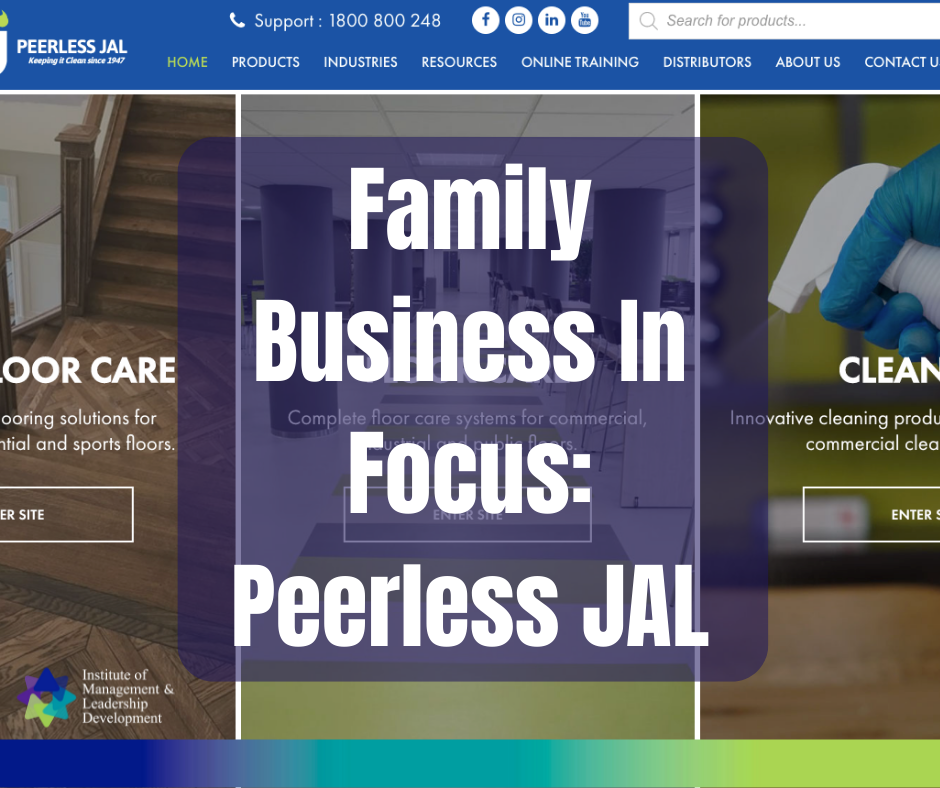
Family Business In Focus – Peerless JAL

At IMLD we get to work with some amazing leaders and managers within small business and family business. Next Monday 19 September is National Family Business Day, and we wanted to highlight some of the amazing family businesses we have the pleasure of working with – today it is Peerless JAL.

Peerless JAL is a proudly Australian-owned and family-run company and has been an industry leader since 1947. They are specialists in hygienic cleaning products and systems, premium floor care, and timber flooring solutions for the commercial, residential and industrial markets.

Leading a Family Business Is Unique

Leading and managing a family business brings with it some unique situations and challenges that many larger, non-family businesses don’t face. We have been able to work with Director and National Operations Manager Summar Hammam, her brother, Director and National Sales Manager Omar Hammam and management personnel such as Ahmed Desoki and Mark Jarvis as they tackle the competitive industry of commercial cleaning with an Australian manufacturing base.

Peerless JAL has made a name for itself over the last 70 years as a leading supplier of cleaning products to the commercial market. Their products continue to deliver as premium, professional grade products that provide great value and are highly effective.

Like the Institute of Management & Leadership Development, Peerless JAL solidified its position in the commercial market as a supplier of premium grade products and formally introduced the Australian Made logo. Like us, they are proud to carry the Australian Made mark of trust, recognition and superior standards.

We are proud to be associated with the wonderful team at Peerless JAL, working hard as a successful Victorian family business in the manufacturing industry. If you would like to know how your small business, School Government Department or hospitality business can benefit from the expertise of the team at Peerless JAL, follow their LinkedIn Page or direct to their website at peerlessjal.com.au.

Related Links On Leadership & Peerless JAL

Top 5 Qualities Of A Great Leader

Leadership Success Takes Many Paths

Is Leadership Training Worth It?

Executive Leadership Coaching Testimonial – Summar Hammam

Are You Looking To Develop Your Family Business Team?

Leading and managing in a family business tasks something! Competing priorities, family members as peers and workmates, difficult conversations – they are all part and parcel of working in a family business. IMLD has been working with small and family businesses since we began in 2004. We understand the unique nature of leading teams and developing cultures within these environments, and what to do when the behaviour and performance starts to drift.

While blood is definitely thicker than water, sometimes it takes a trusted advisor from outside the family to provide ideas, suggestions and options that you wouldn’t normally think of to bring your family business back in the direction of the goals you have set. If you would like to improve the efficiency and effective of your family business but don’t know where to start, book in a Discovery or Q&A call with one of our skilled facilitators.

#familybusiness #nationalfamilybusinessday #smallbusiness #leadingfamilybusiness #peerlessjal #IMLD #developingleaders

29Aug

Negative Leadership Is The Root Cause of Every Negative Culture

When you hear the phrase ‘they have a negative culture’ (or worse ‘they have a toxic culture’) you don’t have to look too far to see what is creating the environment – negative leadership. In almost all cases when we have worked with businesses (either doing the work or pitching for work), the negative culture is matched by negative leadership.

As mentioned in a recent Forbes article, this negative leadership manifests itself in a variety of forms, but they are all very easy to see – particularly from the outside looking in. In many cases, the behaviour of the leadership group exhibiting negative traits has been accepted by the people around them as ‘that is just how it is around here’.

https://vimeo.com/390334122

Overt Negative Leadership Traits

Some of the obvious negative leadership traits include:

  • making excuses for poor behaviour,
  • blaming others for mistakes that they have made,
  • ignoring the poor behaviour of themselves or people close to them,
  • favouring one group of people over the other,
  • publicly belittling staff,
  • using offensive or demeaning language to staff, and
  • using aggressive and intimidating behaviour.

Covert Negative Leadership Traits

Some of the more subtle, but equally negative and destructive traits to a culture include:

  • seeking training courses to ‘fix’ problem staff without wanting to do any training themselves,
  • a refusal to acknowledge their part in poor behaviour,
  • lack or personal adherence to the company values, and
  • passive aggressive responses (such as talking behind a colleagues back and not dealing with issues directly)
  • not sharing their own faults or areas of improvement (the superman/woman complex)

One of the most difficult things to deal with as an Executive Leadership Coach and cultural change facilitator is when it is obvious that the greatest problem of an organisation is with the behaviours of the senior person in the business – and they will not acknowledge it.

Negative Cultures Start With The Leader

Several years ago I was asked to work with a business and help address their ‘negative culture’. It didn’t take too much effort to see that the greatest problem was with the leader. The business was only small (less than 15 people), but had turned over 20 staff in less than 3 years. Harassment and bullying claims had been made, and the CEO was known for ‘flying off the handle’ when things didn’t go her way.

We experienced a similar case with a male CEO of a small firm. Similar turnover of staff in the same time frame, and similar ‘vibe’ of the business – everyone went quiet when the issue of negative culture and leadership came up. We were asked to develop an executive leadership program that addressed the teams ‘lack of resilience’, rather than being asked to address the behavioural issues that were at the crux of the issue – the leaders poor behaviour towards his staff. When we discussed this issue, it was deflected and excuses were made – and we didn’t get the work (which wasn’t surprising).

They say that you can lead a horse to water, but you can’t lead certain people to acknowledge or address their negative behaviours, even when it is obvious it is having a vastly detrimental effect on their business. Without going overboard on metaphors, a leopard can’t change it spots, a scorpion will always be a scorpion, an a toxic leader will always be a toxic leader.

When it comes to negative cultures, you don’t have to look too far to see the root cause of the problem, and it is most often with leadership.

10Aug

Leadership Training Has A New Melbourne Home

We are very excited to announce that leadership training at the Institute of Management & Leadership Development has a new home in Melbourne! What was old is new again. Having spent the last couple of years focussing on online delivery – like many leadership training and executive coaching businesses – we have returned to Melbourne with a brand new facility able to cater to some exciting new opportunities.

The Option of Online Or Face-To-Face Leadership Program Delivery

While we will still be keeping the flexibility of the online executive coaching, executive leadership coaching and leadership workshops, we are again adding the options of blended learning (some face to face and some online) and full face-to-face workshops and leadership programs. Our new training calendar is almost complete, providing leaders, managers and small business owners with multiple options to ensure that their learning and development needs are being met in the best way possible.

IMLD's Abell Boardroom for Leadership Training in Melbourne
IMLD’s Abell Boardroom for Leadership Training in Melbourne

‘This is an exciting time not only for all of at IMLD, but also for our clients as well’ IMLD CEO, Michael Peiniger said. ‘The facilities at Level 17, 31 Queen Street are second to none – the meeting and break-out rooms are a great size and have amazing light – they provide a relaxed yet attentive atmosphere that provides the right feel for a memorable learning experience.’ The Level 17 facility provides a number of small meeting room and boardroom spaces that can cater specifically to the size of the leadership program or workshop being delivered.

Experiential Leadership Training Returns

One of the signature options of the Institute of Management & Leadership Development’s leadership programs and workshops is the availability of experiential leadership training. ‘Experiential leadership training is included in many of our leadership programs and workshops and provides learners with an ‘immersive’ leadership experience. It is similar to a pilot simulator for aircrew – we have created a number of leadership scenarios for teams to challenge their leadership skills and behaviour in real time.’ Peiniger says. ‘After being briefed on an activity, a leaders has to communicate and brainstorm with their team, develop a plan, and implement action the best way they can with the time, resources and team available to them. The new facilities at Level 17 provide us with such flexibility – not only to provide great experiential training, but also the space and environment to create great reflection opportunities and debriefs with leaders in smaller one-on-one spaces’.

IMLDs Metro Meeting Room for Leadership Workshops and Experiential Learning

The experiential leadership training programs runs across the Executive Leadership Program, Emerging Leaders Program as well as the Diploma of Leadership & Management. ‘Participants in our leadership programs want to gain more than knowledge’ Peiniger said. ‘They are looking for the opportunity to test and practice new skills in a challenging environment, as well as get some very practical tips and options for doing things better in the future, which our experiential training and skilled facilitators can provide’.

Leadership Training and Executive Coaching At Its Finest

Finding the right environment to learn and grow is important for leadership development and executive leadership coaching. ‘For many leaders, the online environment has provides a level of comfort and security to develop and explore their leadership strengths and weaknesses, which can often be challenging things to tackle. For others, it has felt restrictive and confining, and have been looking for an opportunity to learn with groups, have meaningful discussion both in and out of the learning environment, and feel connected to the people around them again. We are delighted to say that we can cater to both groups again with the facilities we have in the Melbourne office’ Peiniger says.

IMLD New Office - One of The Best Views in Melbourne for Leadership Training
IMLD New Office – One of The Best Views in Melbourne for Leadership Training

The New IMLD Melbourne Office For Leadership Training

The new Institute of Management & Leadership Development’s office is located on Level 17, 31 Queen Street, Melbourne. The office is only a short stroll from Melbourne’s most iconic railway station, Flinders Street, and is close to available parking and lunch break meal options.

If you are looking to develop your leadership skills through executive leadership coaching, leadership programs or workshops, give us a call on +613 9069 8172, email us at leader@developingleaders.com.au to discuss or book a Q&A through Calendly on our Contact Page.

12Jul

Leaders Treat Others How They Would Like To Be Treated

Leaders Treat Others How They Would Like To Be Treated. Some old adages don’t serve leaders and teams very well – and ‘treat others how you would like to be treated’ is definitely one of them.

While I am sure the intentions were good – is there a lazier, more biased, self-serving way of existing?

Treating others how you want to be treated assumes that your way of behaving and existing is the only way – the right way – and that other ways aren’t really worth listening to.

In a multicultural nation like Australian where more than 50% have a family member who was born overseas, assuming one way to be treated is a bit naive.

Teaching leaders to think beyond themselves, their perspectives and their opinions is a simple yet crucial aspect to Executive Leadership Coaching, Emerging Leaders Programs as well as Executive Leadership Programs. We can all get caught up in focussing on our way of doing things and assuming that it is the ‘right’ way to do things.

Leaders Listen and Seek To Understand Other Views

How about seeking to listen, seeking to understand, seeking to adapt – and treating people / teams / staff the way that they want to be treated?

You want to have a meeting at 8am on a Monday morning because it sets you up for the day and you want to know what is going on in your business. What does your team want? 8am? Every week?

Needs, wants and expectations.

Weekly or fortnightly one-on-one meeting with your team member gets bumped because ‘something more important came up’? This is one where either adage applies.

When leaders take a moment to see how they can meet everyone’s expectations and not just their own, a whole bunch of things start to change. Trust. Empathy. Compassion. Truth. Responsibility.

‘How would your team like to be treated?’

RELATED ARTICLES ON LEADERSHIP

How Important Are Values To Your Leadership & Business?

What Is Executive Leadership Coaching?

True Leaders Make Everybody Feel Like a Somebody

How Important Are Personal Values To Your Leadership?

#business #team #people #developingleaders #IMLD #executivecoachingmelbourne #executivecoach #executivecoaching #leadershipcoach #leadershipcoaching

01Jul

Thank you to our Executive Coaching and Leadership Program Clients!

A huge thank you to our Executive Coaching, Executive Leadership Coaching and Leadership Program Clients! As Financial Year 2021/2022 comes to an end, we wanted to go ‘beyond the numbers’ (borrowing your tagline Fiscal Artisans pty ltd!) and say thank you to the wonderful CEO’s, small business owners, leaders, managers and supervisors that have trusted us in the last 12 months to develop your leaders and help deepen leadership and management skills.

Leadership Programs
Executive Coaching
Executive Leadership Coaching
Developing Leaders Leadership Programs & Workshops

It is a great privilege to work with talented people who want to stretch themselves and develop themselves (and their teams and businesses) further, and we certainly don’t take it for granted!

Developing Leaders Executive Coaching, Executive Leadership Coaching & Leadership Programs

Thank you for taking part in our:
? Executive Coaching & Executive Leadership Coaching (and the transition and blend of face to face and online coaching)
? Emerging Leaders Program (and the wonderful conversations and connections that developed)
? Executive Leadership Program (and the challenging conversations and new ideas that developed)

? Diploma of Leadership and Management program (both face to face and online)
? Experiential Leadership Program (and the challenging activities and debriefs included),

? Leadership & High Performance Team Workshops, and
? Velocity Leadership CheckPoint leadership assessment tool.

There is an old African proverb that says that ‘it takes a village to raise a child’ – I think that it also takes a team to raise a leader.
Thank you to the teams at 4Legs Pet Food CompanyPeerless JALSunbather Pty LtdAll Saints EstateSummer Foundation LtdLyondellBasellGlobal Buildings Performance Network (GBPN)Fiscal Artisans pty ltdVow and many others for the opportunity to play a small part in raising the skills of your amazing teams.


Thank you also to all of the individual leaders that started their development with a Velocity Leadership CheckPoint and continued their leadership process through coaching, workshops or programs – It has been our pleasure to work with you all.

Velocity Leadership CheckPoint - Leadership Assessment Tool for Leaders
Developing Leaders Leadership Assessment Tool – The Velocity Leadership CheckPoint

We are all looking forward to continuing and maintaining these amazing relationships for FY2022/23 and beyond!
Yours in Developing Leaders.

M
#leadership#coaching#executivecoaching#executivecoach#leadershipcoaching#leadershipcoach#executivecoachingmelbourne#leadershipcoachingmelbourne
#leadershiptrainingmelbourne#emergingleaders#emergingleadersmelbourne#developingleaders#IMLD

25Jun

Leadership Growth Through The Emerging Leaders Program

‘It took me a while to find a leadership coach I wanted to work with, and I feel incredibly lucky to have come across Michael, who has the right mix between personable but professional and supportive but honest feedback. At first I knew there were areas I wanted to work on, but I couldn’t put my finger on what they were. Michael not only helped me identify these areas, but then grounded and rooted me in my own values, strengths and purpose which has helped realign me with my own goals and direction. “
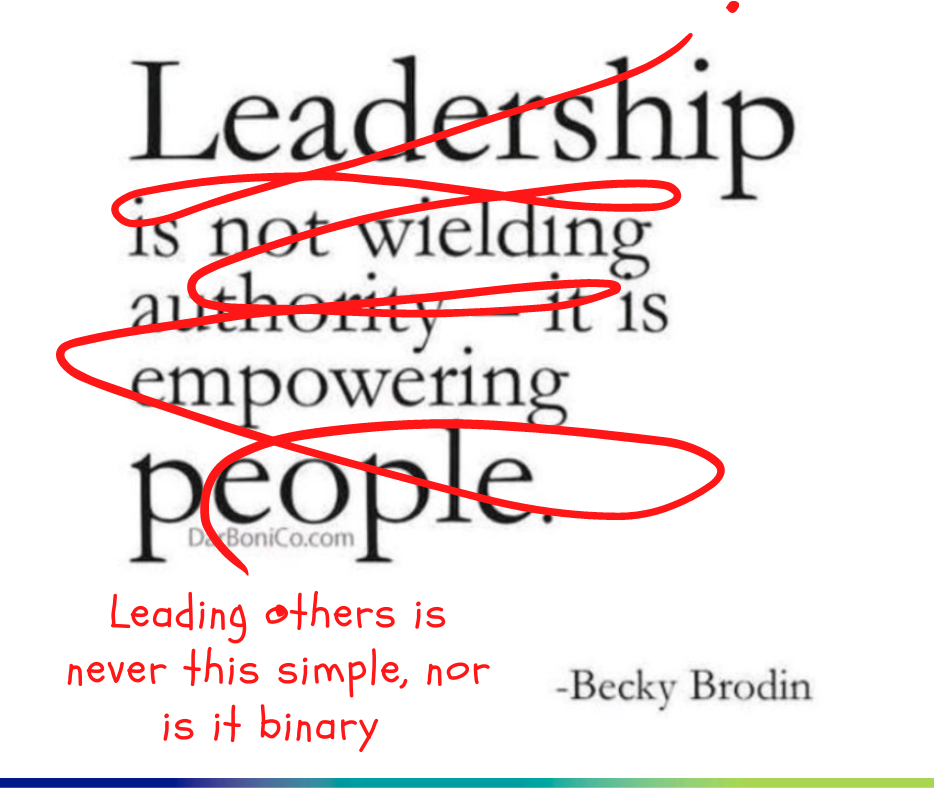
31May

Leadership Is More Than Just Empowerment

Leadership is more than just empowerment. A recent post on LinkedIn from Leadership First posted this image about leadership, empowering people and wielding authority – and I had to disagree. The line between ‘wielding authority’ to ’empowering people’ isn’t a binary choice – it is a continuum, and all points on that continuum are useful to a leader.

You Need Skills and Experience to Empower Others

As a leader, empowering people is obviously important – but people need to have the right skills and experienced to be fully empowered. Fully empowering someone who has neither the experience or skills to complete the task? That is just downright lazy and setting someone up to fail.
In addition, there are times when wielding authority is needed! Forget the negative connotations you have associated to authority by the use of the word ‘wielding’; there are times when a leader must exercise authority, control and firm decision making. While many decisions benefit from consensus, collaboration and wide discussion, others benefit from firm and swift use of power and authority. That is part of the nuance – and difficulty – of being a leader. Knowing the difference is the difference between being a good or bad leader – which often takes experience (and quite often, some bad choices between authority and empowerment).

The Continuum Between Leadership, Authority and Empowerment

The line between ‘wielding authority’ to ’empowering people’ isn’t a binary choice – it is a continuum. In between there is directing, coaching, mentoring and delegating – all of which are useful depending on where you, the business and the individual is on their development path. Empowering a novice in a task they aren’t familiar with can be just as dangerous to the business as directing and micromanaging an expert to do a task they have completed countless times.
Focussing purely on empowerment shies away from discussions of dependability, responsibility and accountability – critical to business -and all of which need a little discussion around authority structures. Fully empowering everyone assumes two critical things – that everyone is skilled and experienced to complete a task, and that everyone is completely responsible and always delivers on their promises. While wanting both, leaders know it is foolhardy to assume either.
For leaders – the use of power and authority can be just as useful for developing others as empowerment – depending on how it is used, when it is used and with who. The key is to know when.

Where Does Your Leadership Sit On The Authority / Empowerment Continuum?

Do you actually know where your leadership sits on the authority / empowerment continuum? Are you more focussed on delegating, coaching or empowering? If you don’t know, perhaps the place to start is by completing the Velocity Leadership CheckPoint.

25 behavioural leadership traits, focussed in 5 distinct leadership capabilities – a ‘must know’ for any leader or team looking to drive high performance. If you haven’t completed the CheckPoint, get in touch with us today to arrange an appointment. Read through the comments and feedback from those that have – many say that it has had a profound effect on how they lead and perform within a team.

The Velocity Leadership CheckPoint and Debrief is the starting point for any of the IMLD Executive Coaching, Executive Leadership Coaching or Emerging Leaders Programs.


#leadershipdevelopment #leadershipskills #leadershiptraining
#executivecoachmelbourne #leadershipcoachmelbourne #IMLD #developingleaders

17May

Leaders Developing Leaders – Interview with Zoe Daniel

In this episode of Leaders Developing Leaders, we have the pleasure of talking with Zoe Daniel, independent candidate for the Federal seat of Goldstein, prior to the upcoming Federal election on 21 May 2022, to talk all things leadership and team.

In addition to being an independent political candidate, Zoe is a mum, wife, journalist, and foreign correspondent. As a journalist in nearly 30 years of reporting, Zoe covered natural disasters, conflict, economics and politics, and all manner of news around the world. She has seen first-hand the impact of climate change in the Arctic, and has covered floods, typhoons, and bushfires across four continents, including Australia.

Zoe has been a rural and regional journalist, a business and finance reporter, and a foreign affairs specialist, interviewing and interacting with prime ministers, treasurers and some of Australia’s top CEOs and small businesspeople. (For more info on Zoe, visit zoedaniel.com.au)

In this episode we discuss leadership influences, values and ethics, and what leadership abilities and behaviours are missing from Federal Parliament that Zoe would like to influence if elected. A great chat with a leader seeking to make a difference to the Federal political landscape – enjoy!

#leadership #team #ethics #independentwomen #IMLD #goldsteinvotes #auspol2022 #developingleaders #leadersdevelopingleaders

Interview Summary

If you are looking for the quick notes from the Zoe Daniel interview, here are the key questions and time stamps.

1. (0min 50sec) What leadership behaviour would you most like to influence in Federal parliament?

2. (4min 00sec) What 3 personal values define who you are (or want to become) as a leader / member of Federal Parliament? 

3. (10min 30sec) Who are your leadership icons or role models? 

4. (13min 45sec) What would you say are your leadership strengths?

5. (15min 45sec) What do you do to manage stress?

6. (17min 15sec) What are your areas or development – or growth points – as a leader?

7. (18min 50sec) What are your communications preferences with your team? (What do you love them to do and what frustrates you)

8. (21min 0sec) What time management ‘hack’ would you pass on to busy leaders seeking to juggle work volume or work / family?

9. (22min 25sec) Current reading, watching or listening – who are you paying attention to right now to develop your leadership knowledge further?

Leaders Developing Leaders

Do you know a small business leader, business owner or executive that has a great insight into leadership? Tell us who they are – we would love to interview them! Leaders Developing Leaders is all about gaining insights into leading and managing others, from those that are doing it right now. From tips, trick and hacks to personal learning and reflection, Leaders Developing Leaders includes insights about leadership for current leaders and managers.

If you know a great leader that others could learn from, reach out and contact Michael at michael@developingleaders.com.au with the details.

Looking to Develop Your Leadership Further?

Do you know your leadership strengths and areas to develop? If not, perhaps the place to start is by completing the Velocity Leadership CheckPoint.

25 behavioural leadership traits, focussed in 5 distinct leadership capabilities – a ‘must know’ for any leader or team looking to drive high performance. The Velocity Leadership CheckPoint and Debrief is the starting point for any of the IMLD Executive Coaching, Executive Leadership Coaching or Emerging Leaders Programs.

10Mar

Emerging Leaders Program – Rebecca Evans Testimonial

‘It took me a while to find a leadership coach I wanted to work with, and I feel incredibly lucky to have come across Michael, who has the right mix between personable but professional and supportive but honest feedback. At first I knew there were areas I wanted to work on, but I couldn’t put my finger on what they were. Michael not only helped me identify these areas, but then grounded and rooted me in my own values, strengths and purpose which has helped realign me with my own goals and direction. “